

A dual motor vibrator carries two separate drive sources inside one body instead of one. WINYI publishes three models in this configuration: the WY0781, WY0782 and WY0785. All three list a 950 rpm gearbox motor paired with an 8,000 rpm motor, 10 vibration modes, a 650 mAh battery and a charge time of 90 minutes or less. Published MOQ starts at 50 pieces without customisation and 1,000 pieces with your logo.
Motor count is where most buyers stop reading and where the useful questions start. The sections below work through what those published figures establish, what they leave open, and which gaps you have to close with the factory before a customer ever sees the product.
En esta guía
- What Does “Dual Motor” Actually Confirm?
- Published Specifications and Verification Status
- The Intended-Use Conflict on the WY0785
- The Ingress Protection Field on These Models
- Compliance for a Remote-Control Model
- Sample Acceptance Checklist
- Commercial Terms for These Three Models
- Customisation Without New Tooling
- How to Compare the Three Models
- Request a Quotation
- Frequently Asked Questions
What Does “Dual Motor” Actually Confirm?
Two motors confirm two drive sources. That is the whole of what the motor count proves.
It does not confirm that each motor runs at its own speed, that either one starts independently, or that every advertised mode combination exists. Those depend on the control board, the button layout and the remote logic, none of which appear in a motor specification. A product can carry two motors and still offer a single combined mode list.
So the question to put to your supplier is not “how many motors.” It is:
Which button or remote function controls which motor?
Can each motor start and stop on its own?
How many combinations does the approved user manual actually list?
Ask for a control matrix, then confirm it against a physical sample. The approved instruction manual is the controlling document here, not the product page.
Product demonstration: dual motor vibrator WY0654
The same caution applies to sensation. Vibration output that a user perceives depends on the eccentric mass, the amplitude, how the motor couples to the housing, the load applied and the enclosure material. Motor speed alone does not establish it. Treat any description of feel as a sample-evaluation finding recorded under stated conditions, not as a property you can read off an rpm figure.
Published Specifications and Verification Status
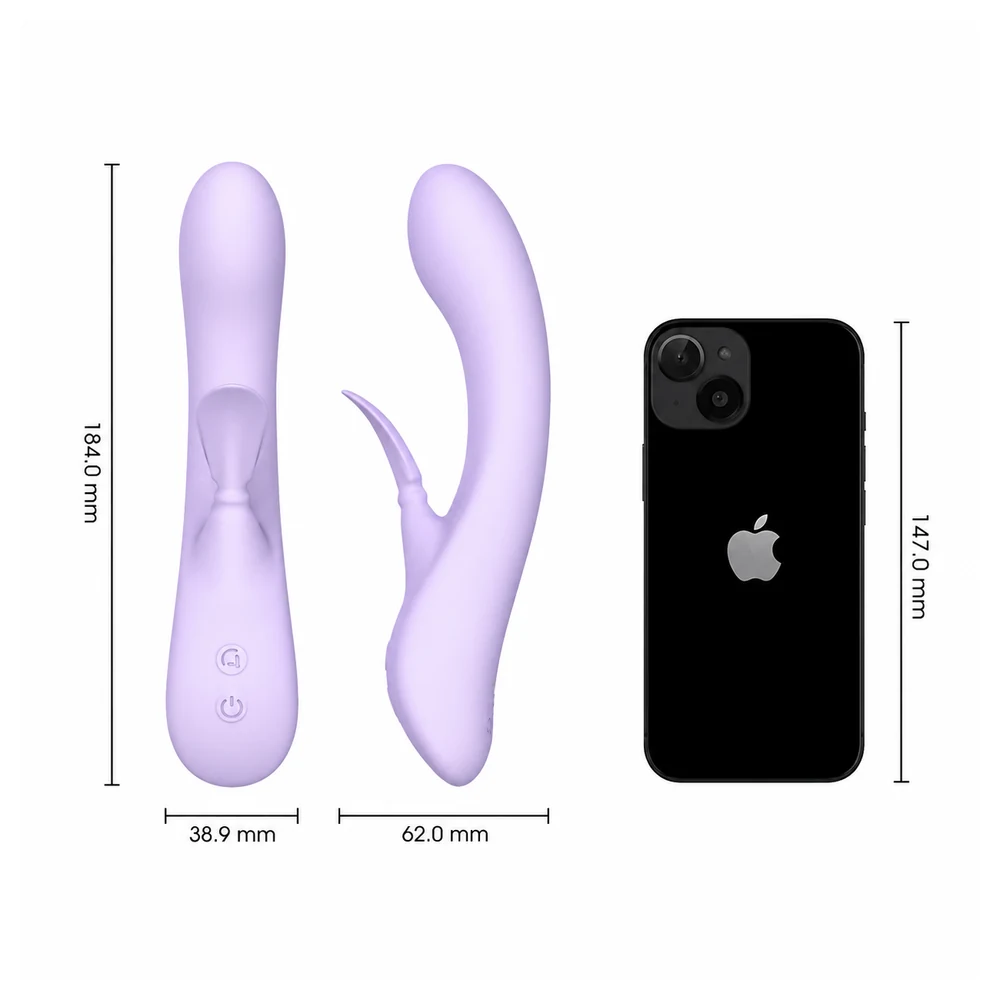
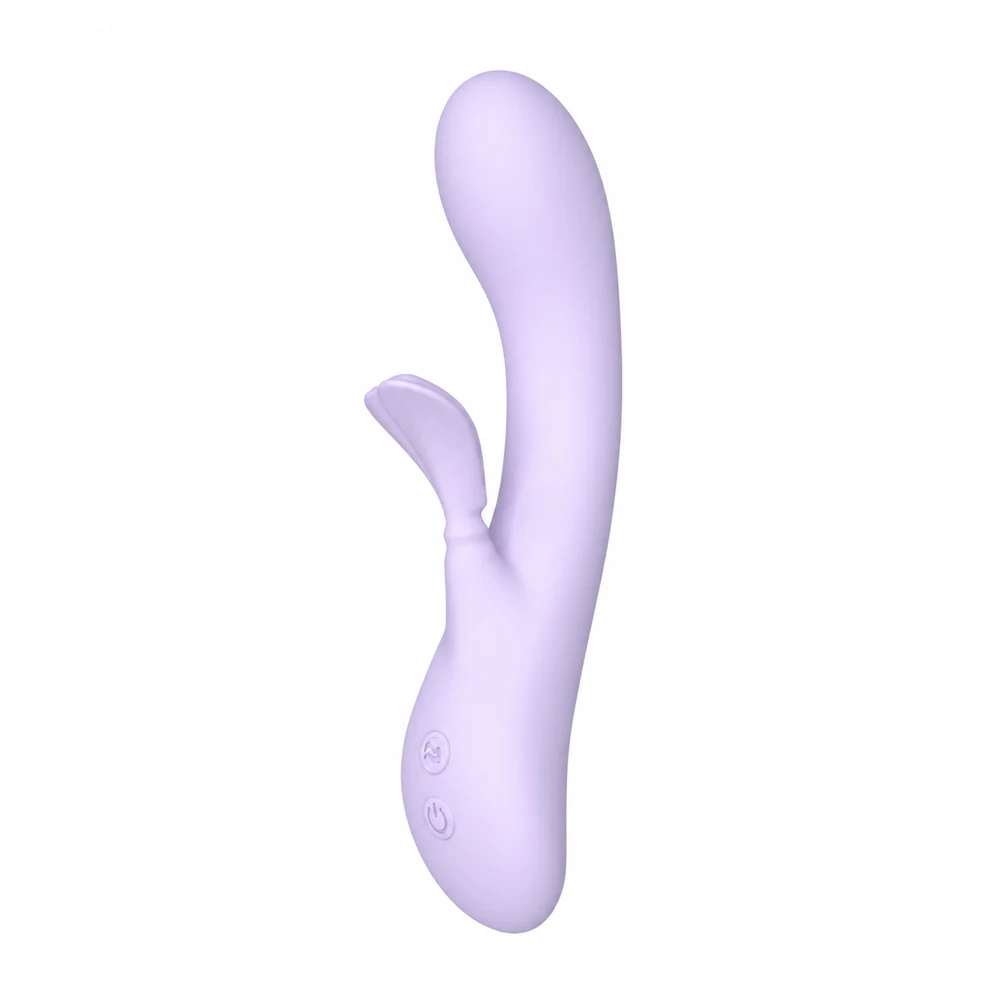
The table below carries three columns for a reason. Published values come from WINYI’s product pages. Some fields need the factory to confirm against your model and order month. Others you have to verify yourself before making a claim in a listing.
Páginas de origen: WY0781 double-ended dual motor vibrator, WY0785 curved dual-action vibrator y el WY0782 lavender dual-action vibrator, which publishes the same dimensions, weight, motors and IPX7 rating as the WY0781.
Four fields carry conflicts or gaps you need closed in writing. Two of them appear on the WY0785 page itself, which is the reason they sit in this table rather than in a footnote.
| Campo | WY0781 | WY0785 | Estado |
|---|---|---|---|
| Factor de forma | Double-ended, flapping head | Curvo | Published specification |
| Dimensiones | 185 × 62 × 39 mm | 136 × 87 × 39 mm (approx.) | Published specification |
| Peso neto | 143 g (approx.) | 130 g (approx.) | Published specification |
| Motores | 950 rpm gearbox + 8,000 rpm | 950 rpm gearbox + 8,000 rpm | Published specification |
| Independent motor control | No especificado | No especificado | Factory confirmation required |
| Vibration modes | 10 (3 speeds + 7 patterns), plus 3-speed flapping | 10 (3 speeds + 7 patterns) | Published specification |
| Control remoto | No listado | Wireless remote, technology not stated | Factory confirmation required |
| Batería | 851841 / 650 mAh, 3.7 V | 851841 / 650 mAh, 3.7 V | Published specification |
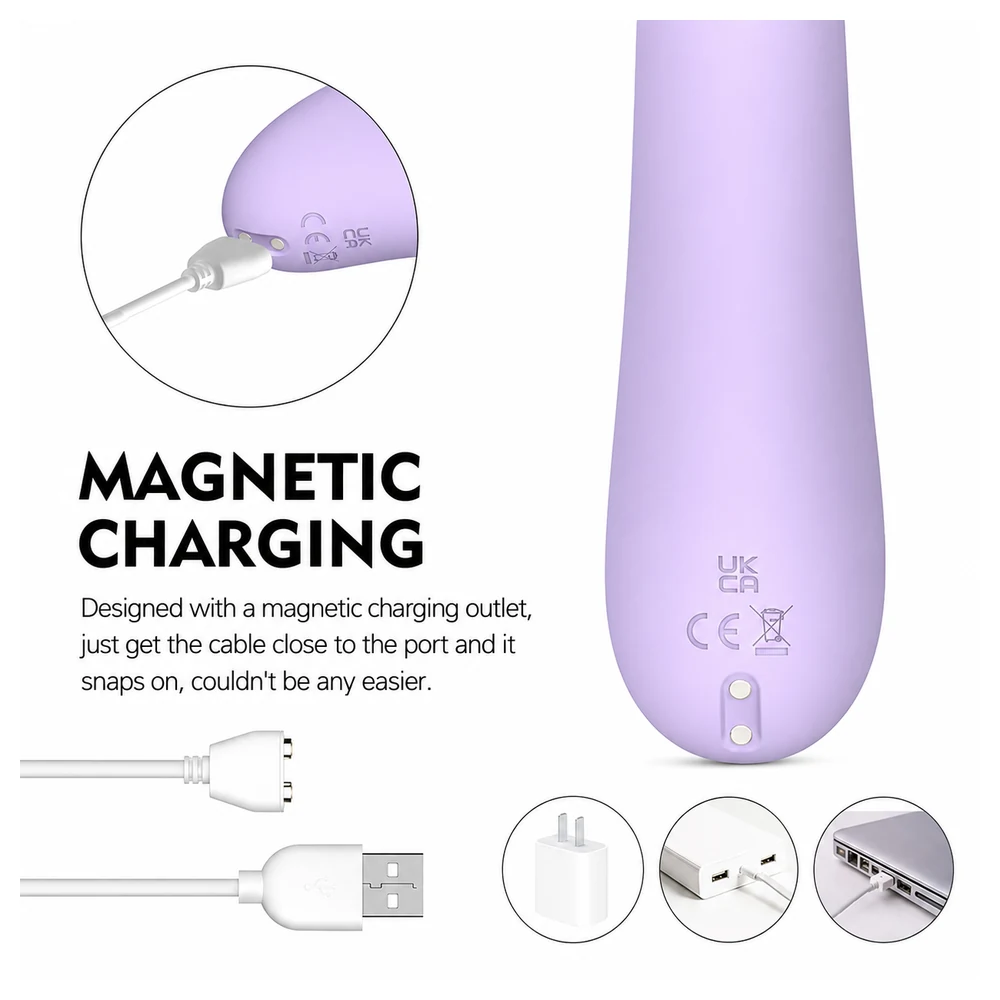
| Carga | USB Type-C magnetic, ≤ 90 min | Magnetic, ≤ 90 min | Published specification |
| Tiempo de uso | ≥ 60 min | ≥ 60 min | Buyer verification (load condition not stated) |
| Ingress protection | IPX7 indicado | IPX7 in table, IPX6 in metadata | Factory confirmation required |
| Ruido | ≤ 60 dB at 30 cm | ≤ 60 dB at 30 cm | Buyer verification (mode not stated) |
| Uso previsto | Femenino | “Famale” in table, P-spot in title | Factory confirmation required |
| Material | Silicona | Silicona | Factory confirmation required (grade not stated) |
| Color | Morado | Negro | Published specification |
The Intended-Use Conflict on the WY0785
The WY0785 product page states “USE: Famale” in its specification table. The page title and description say “Curved for G-Spot & P-Spot Stimulation.” Image captions on the same page describe a multi-functional anal toy. Those three statements do not agree with each other.
This matters more than a typo. Anal-contact products carry design and user-information requirements that vaginal-only products do not, and retention geometry is the central one. ISO 3533:2021, “Sex toys — Design and safety requirements for products in direct contact with genitalia, the anus, or both”, sets safety and user-information requirements covering materials, design and instructions for exactly this product class.
Until the factory confirms the controlled intended use, the retention design and the approved instructions for this model, do not list the WY0785 for anal or P-spot use, and do not describe it as unisex. Ask for three documents: the controlled product specification stating intended use, the approved user instructions, and confirmation of how the design addresses ISO 3533 requirements for the uses you plan to advertise.
If the answer is female use only, your listing is straightforward. If the answer includes anal use, the evidence has to support it before the copy does.
The Ingress Protection Field on These Models
The WY0785 page shows IPX7 in its specification table and IPX6 in its page metadata. Those record different tests under IEC 60529, so one of them is wrong for this model.
Request the test report and the model revision it covers before repeating either figure. For what an IP code proves, what it cannot prove, and why a rating is not a cleaning instruction, see what an IP rating proves on the WY0666 rose tongue vibrator page.
Compliance for a Remote-Control Model
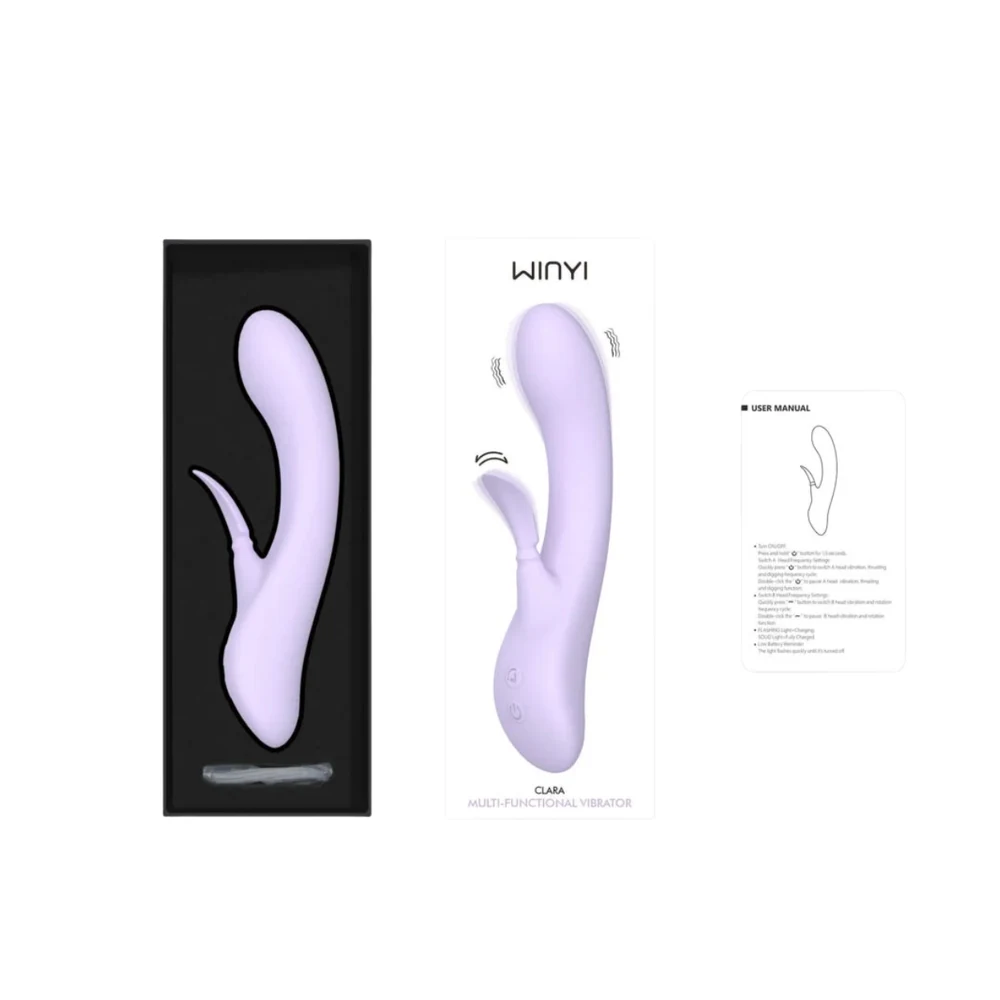
The WY0785 includes a wireless remote. Before you can work out what compliance evidence you need, the factory has to tell you one thing: what technology the remote uses.
Confirm the remote technology first. A remote that intentionally transmits radio-frequency energy follows one route. An infrared remote, or another control method, follows a different one. Nothing below applies until you know which you have. Ask for the protocol, the frequency band and confirmation that the tested combination matches the production combination of product plus remote.
United States. If the remote intentionally transmits RF energy, it is an intentional radiator. FCC Enforcement Advisory DA 22-312, released 29 March 2022, states plainly that “SDoC authorizations may not be obtained for intentional radiators,” and that such a device “generally must be authorized by the Commission’s certification procedures.” So a Supplier’s Declaration of Conformity does not cover the transmitter function. Verify the FCC ID, the grant, the labelling, and that the authorised configuration matches what will actually ship to you.
Hold that paperwork yourself rather than assuming the factory’s copy suffices. The FCC’s importation guidance states that “the ultimate consignee must be ready to provide to Customs and/or the FCC the specific equipment authorization documentation,” and on your shipment that consignee is you.
European Union. A wireless model may fall under Directive 2014/53/EU, the Radio Equipment Directive, which covers electrical or electronic products that intentionally emit or receive radio waves. Under it the manufacturer draws up an EU declaration of conformity, compiles technical documentation before the equipment goes on the market, and affixes CE marking. Essential requirements span health and safety, electromagnetic compatibility and efficient use of radio spectrum.
Note what CE marking is: a manufacturer’s own declaration backed by a technical file. No EU body issues a “CE certificate,” so a document with that name proves nothing on its own. Ask for the EU declaration of conformity and the technical documentation behind it.
GPSR sits alongside these, not instead of them. Regulation (EU) 2023/988, the General Product Safety Regulation, took effect on 13 December 2024 and requires a responsible economic operator established in the EU. It reaches consumer products that sector-specific legislation does not already handle. It does not replace RED or RoHS obligations where those apply.
On material claims. Both product pages list FDA among the certifications, which does not mean what most buyers assume. The FDA silicone claim explained on the WY0666 page sets out why, and what to request instead.
Assemble your applicable-legislation list per model and per destination market before shipment, and have a compliance professional confirm it. The list differs between a wireless model and a non-wireless one.
Sample Acceptance Checklist
Run these as documented acceptance tests with recorded conditions, not as informal impressions. Agree the sample size, the conditions and the pass criteria with your supplier in writing before samples ship, so a disagreement later has something to refer back to.
These four tests exist because a second motor changes the failure profile. Run them in addition to your standard incoming checks.
| Prueba | Conditions to record | Suggested criterion | Evidence to keep |
|---|---|---|---|
| Motor control behaviour | Each motor driven separately, then both together, every button and remote function exercised | Behaviour matches the approved user manual line by line | Annotated control matrix signed off |
| Run time, both motors at maximum | Ambient temperature, starting charge state, both motors at highest setting | Meets the figure your quotation states for the two-motor condition | Timed log with start and end times |
| Surface temperature after a full two-motor run | Point of highest reading, instrument named, time from shutdown | Within the limit agreed with your supplier | Instrument reading with timestamp |
| Remote range, pairing and interference | Distance, orientation, other RF sources active in the room | Meets the range agreed in writing, with no dropout or cross-pairing | Test record per unit |
Beat frequencies deserve a note of their own. Two motors turning at different speeds inside one housing can produce an acoustic result that neither motor makes alone, so measure noise with both running rather than only in single-motor modes.
For the general incoming sequence covering dimensions, finish, odour, packaging and batch consistency, plus how to set sample size and batch-rejection proportion, use the sample acceptance framework in the nine-model range comparison junto con el 15-point sample approval checklist.
Commercial Terms for These Three Models
All three publish the same terms: MOQ of 50 pieces without customisation and 1,000 pieces with your logo, 7 business days for stock, 30 to 35 days for customised runs after production sample approval, 1 to 3 free samples and a 6-month warranty period.
One caveat specific to this configuration. Adding or changing a remote alters the transmitting configuration, which can invalidate an existing FCC or RED file and add a re-testing cycle to the customised lead time. Ask the supplier to quote that cycle separately rather than assuming it fits inside the 30 to 35 days.
The full picture on how these terms behave, including the MOQ conflict between the product pages and the service page and what the warranty period leaves undefined, sits in the commercial terms section of the nine-model range comparison.
Customisation Without New Tooling
Colour matching to Pantone, logo application by silk-screen printing or laser engraving, and packaging all sit outside tooling. WINYI publishes three packaging tiers: retail colour box, premium gift box, and a launch kit with a branded sleeve or label.
Shape changes, altered curvature, different motor placement, changed mode structure and added app control require mould or engineering work. WINYI states that it runs concept sketches, 3D modelling, ergonomic refinement, structural engineering and mould development in-house. Timelines and costs for that route come from a project review rather than a price list.
Note that changing the remote or adding app control can change your compliance evidence as well as your tooling cost, because it alters the transmitting configuration. Raise both together. The OEM cost breakdown covering mould, motor, packaging and freight sets out where the money goes on the tooling side.
How to Compare the Three Models
Once you close the open fields above, the comparison comes down to form factor and control method rather than motor specification, because all three publish the same motor pairing.
The WY0781 and WY0782 publish identical dimensions, weight, motors and IPX7 rating, differing in colourway. The WY0785 publishes a different form factor and adds a wireless remote, which brings the RF compliance work described above.
Order a small verified quantity of one model and run the acceptance checklist before committing to a customised production run. Confirm the current minimum in your quotation first.
Request a Quotation
Include your target quantity, destination market, the model or models you want priced, and your customisation level. Add a line asking for the remote protocol and the control matrix, because a standard quotation rarely carries either and both decide your compliance work.
Name the compliance documents your market needs so the supplier can tell you what already exists for that model rather than what it can produce later.
Frequently Asked Questions
What should a control matrix for a dual motor product contain?
Which button or remote function drives which motor, whether each motor starts and stops independently, and the full list of combinations in the approved user manual. Confirm it against a physical sample.
Why does the run-time figure need a load condition?
A published run time does not state whether the factory measured it with one motor running or both. Two motors drawing at once is the demanding case, so agree which condition the figure covers before you use it.
Can a Supplier’s Declaration of Conformity cover a wireless remote for the US market?
Not for the transmitter function. FCC Enforcement Advisory DA 22-312 rules out SDoC for intentional radiators, which generally require certification instead.
What should I ask for before listing a product for anal use?
The controlled specification stating intended use, the approved user instructions, and confirmation of how the design addresses ISO 3533:2021 requirements. Marketing copy on a product page is not sufficient evidence.
Does a “CE certificate” from a supplier prove EU compliance?
No EU body issues CE certificates. Request the EU declaration of conformity and the technical documentation behind it, and confirm which directives that file covers for your model.