

How you clean an adult toy depends on what it’s made of, not which brand made it or what it cost. One distinction matters more than any other before you pick a cleaning method: whether the surface is non-porous (silicone, ABS, stainless steel, glass) or porous (TPE and other soft blends), since that single fact determines which agents you can safely use, whether boiling or a sanitiser is even an option, and how long the product realistically lasts under your care. This guide walks you through the correct method for each material, the charging-port precautions your motorised units need, and a frequency reference you can check against on a routine basis.
Why Cleaning Is Not Optional
When you clean an adult toy, you’re removing lubricant residue, dust and skin oils from its surface using a method chosen by material, not by brand. Treat it the same way you’d treat any product that contacts skin directly and gets reused, as routine care rather than a moral checklist.
What Residue Does to Each Surface Type
A non-porous surface, silicone, ABS, stainless steel or glass, holds residue on top of the material rather than inside it, which is exactly why it can be fully cleaned with the right method. A porous surface like TPE behaves differently: it absorbs contact residue into microscopic gaps in the material itself rather than leaving it sitting on the surface. Once that happens, you’re reducing contamination with each clean, not eliminating it, since what’s below the surface of a porous material isn’t something you can fully verify by looking at it. That’s also why porous products have a shorter realistic lifespan than non-porous ones built to the same spec, since not every material ages the same way.
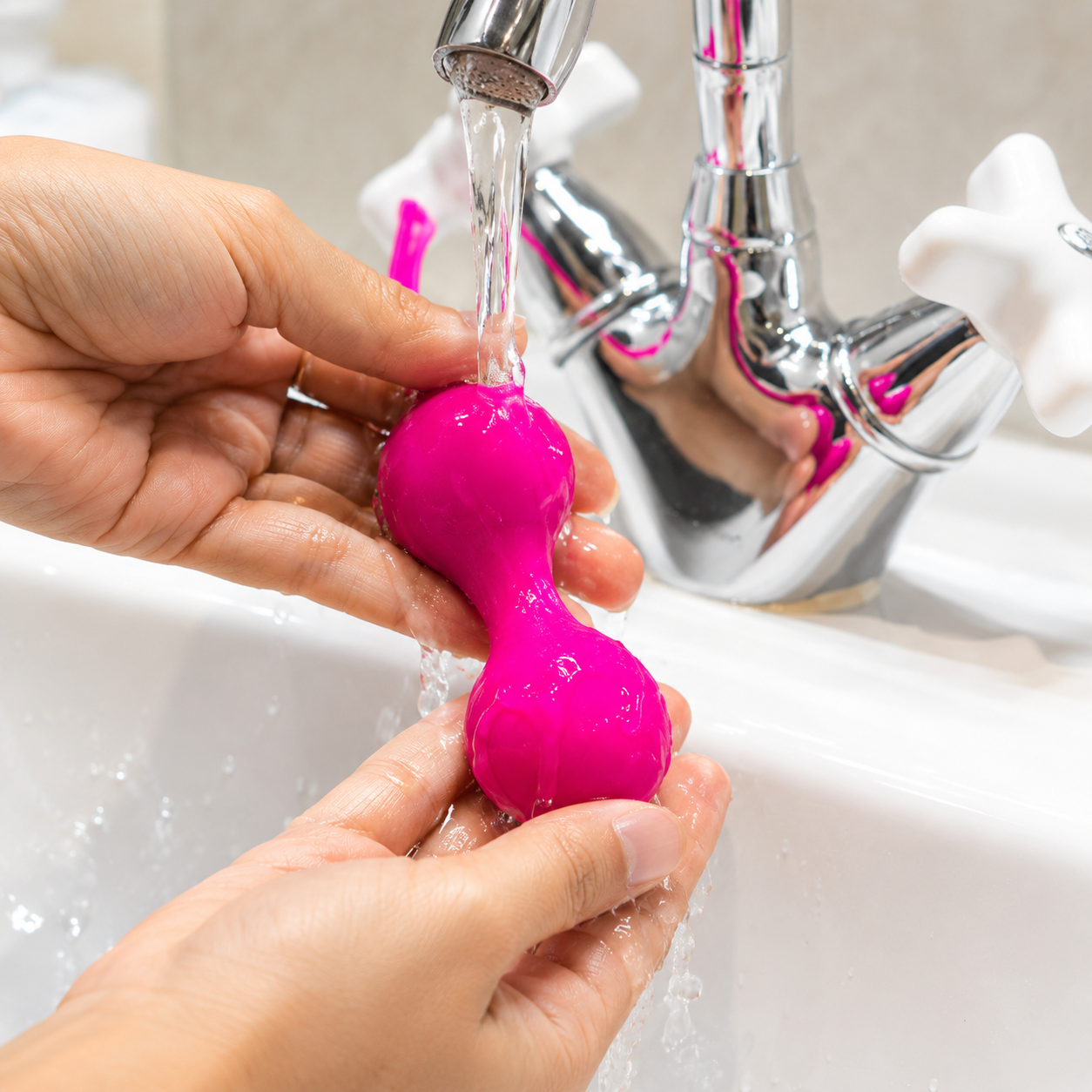
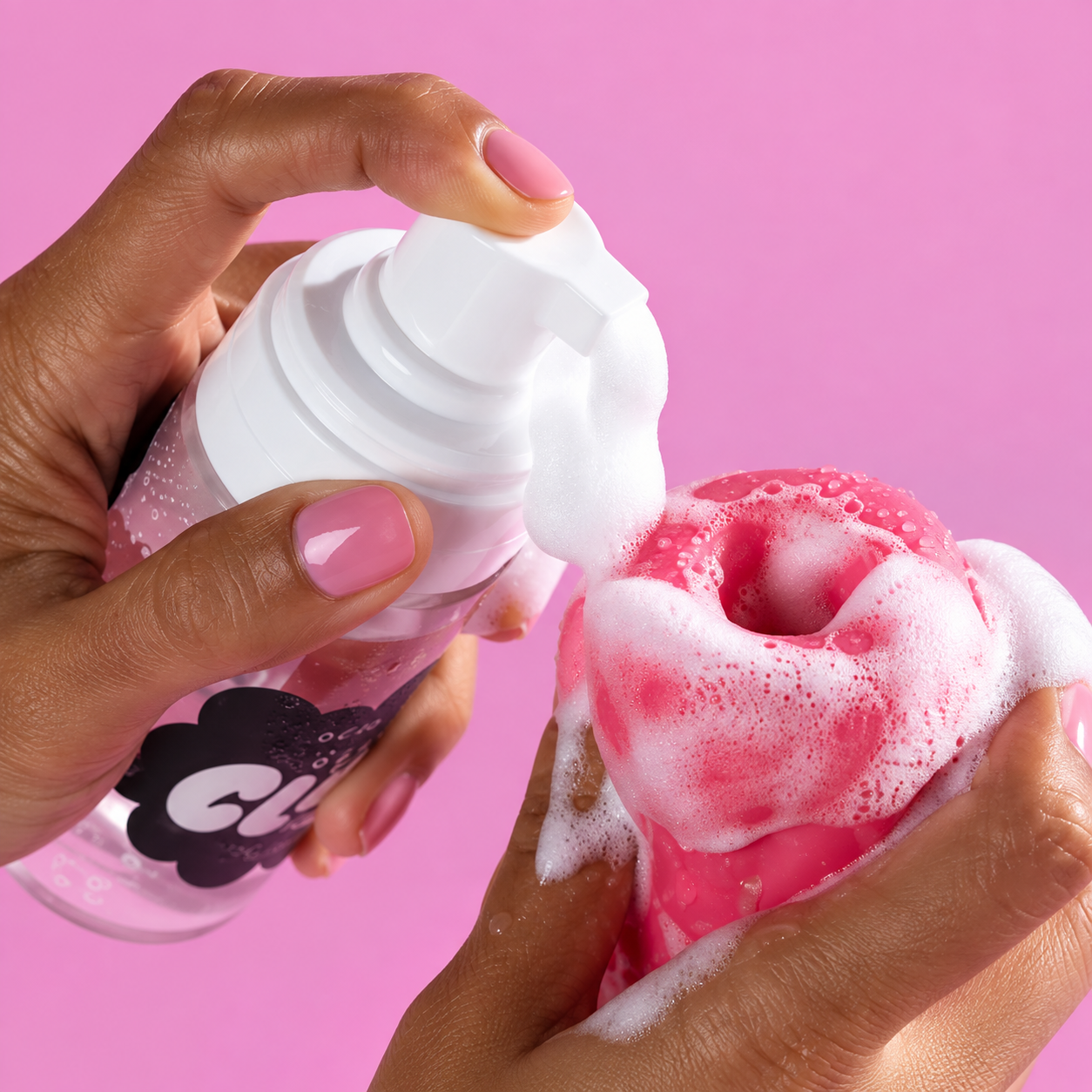
Method by Material: Silicone, TPE, ABS and Metal
You’ll find a specific sequence for each material below. Skip straight to a generic “wipe it down” step and you risk the most damage and the most residual contamination.
Non-Porous: Silicone, ABS, Stainless Steel, Glass
Wash your piece with warm water and mild soap, working the lather over the full surface, then rinse thoroughly and pat it dry with a clean, lint-free cloth. That’s the routine step for all four non-porous materials, and it’s sufficient after ordinary use.
Only reach for boiling or a sanitising step when the manufacturer specifically advertises heat resistance for your product, and never on anything with a motor, battery or glued-in insert. Where it does apply, a water boil generally needs several minutes of full submersion to be effective, not a quick dip. If you’re not sure your product’s material grade actually qualifies as body-safe, ISO 10993 is the standard that formally evaluates this kind of direct, repeated skin contact, and it’s worth checking any silicone versus TPE product listing you’re buying from to confirm the grade if it isn’t stated clearly.
Before you consider a piece fully clean, run a quick surface check: the material should feel smooth and consistent with no tackiness, no visible residue in seams or texture lines, and no lingering odor. If any of those persist after you’ve given it a proper wash, that’s a sign the routine clean wasn’t enough, not a reason to reach for a harsher agent.
Porous: TPE and Soft Blends
TPE and similar soft blends hold moisture and residue differently than the non-porous group, so the sequence has to be gentler, not more aggressive. Wash your TPE piece with warm water and mild soap, avoiding any scrubbing motion that could work residue deeper into the surface rather than lifting it off, then rinse fully.
Drying matters more here than with any other material class. Give it a complete air dry, since you’ll find this takes noticeably longer than a silicone or ABS product, and never store it while even slightly damp. Cleaning reduces contamination on a porous surface, it doesn’t remove it entirely, which has a direct implication for buyers: a TPE product has a realistically shorter usable lifespan than the same design built in silicone or ABS, and that’s a material property, not a quality defect. If you’re shopping for a replacement or comparing options while you’re at it, browse WINYI’s product catalogue to see current material specs side by side.
Dedicated Cleaner versus Mild Soap
Both options work for you, and which one you reach for depends on the material and how deep a clean you actually need.
Choosing a Cleaning Agent
| Cleaning Agent | Silicona | TPE | ABS | Stainless Steel |
|---|---|---|---|---|
| Dedicated sex toy cleaner | Suitable | Suitable | Suitable | Suitable |
| Mild fragrance-free soap | Suitable | Suitable | Suitable | Suitable |
| Diluted isopropyl alcohol | Suitable on hard, non-porous silicone | Avoid, can degrade the surface over time | Suitable | Suitable |
| Boiling water | Suitable only where heat resistance is stated and there’s no motor, battery or glued insert | Avoid, most TPE blends aren’t heat-stable | Avoid, risks warping or discoloration | Suitable |
| Household disinfectant spray | Avoid, can leave a residue that isn’t meant for skin contact | Avoid | Avoid | Avoid, can pit or discolor the finish over repeated use |
General compatibility by material class. Always check the specific product’s own care instructions first, since coatings and blended materials can change what’s actually safe.
A dedicated cleaner is your safer default across every material listed, since it’s formulated specifically for this contact use rather than borrowed from another household purpose. Avoid abrasive pads on any of these materials, keep alcohol off anything soft or coated on your product, and don’t let petroleum-based or silicone-based lubricant residue sit on a silicone surface, since silicone-on-silicone contact degrades both over time. One rule is worth remembering from this section: match the agent to the material class, never to what’s already in the cabinet.
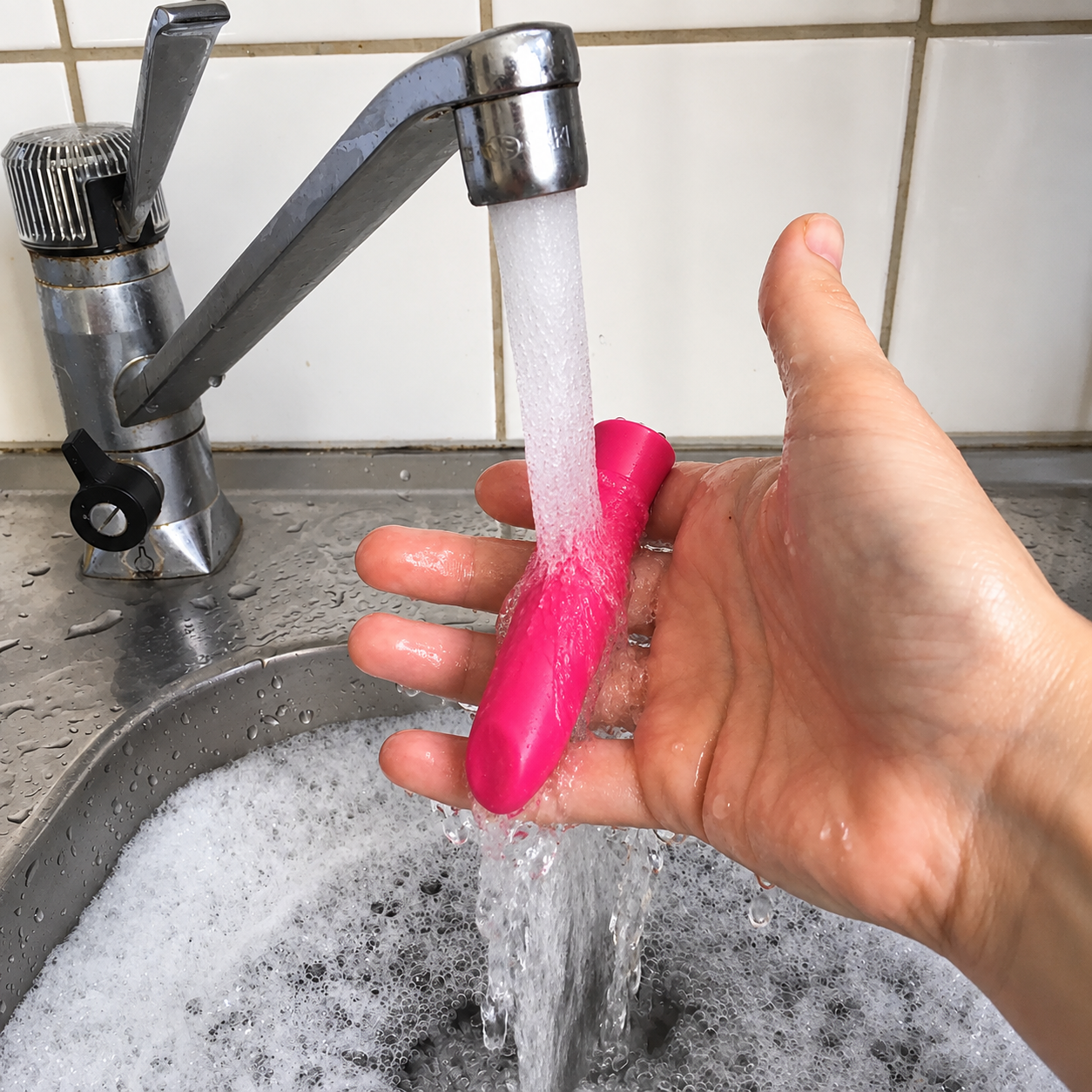
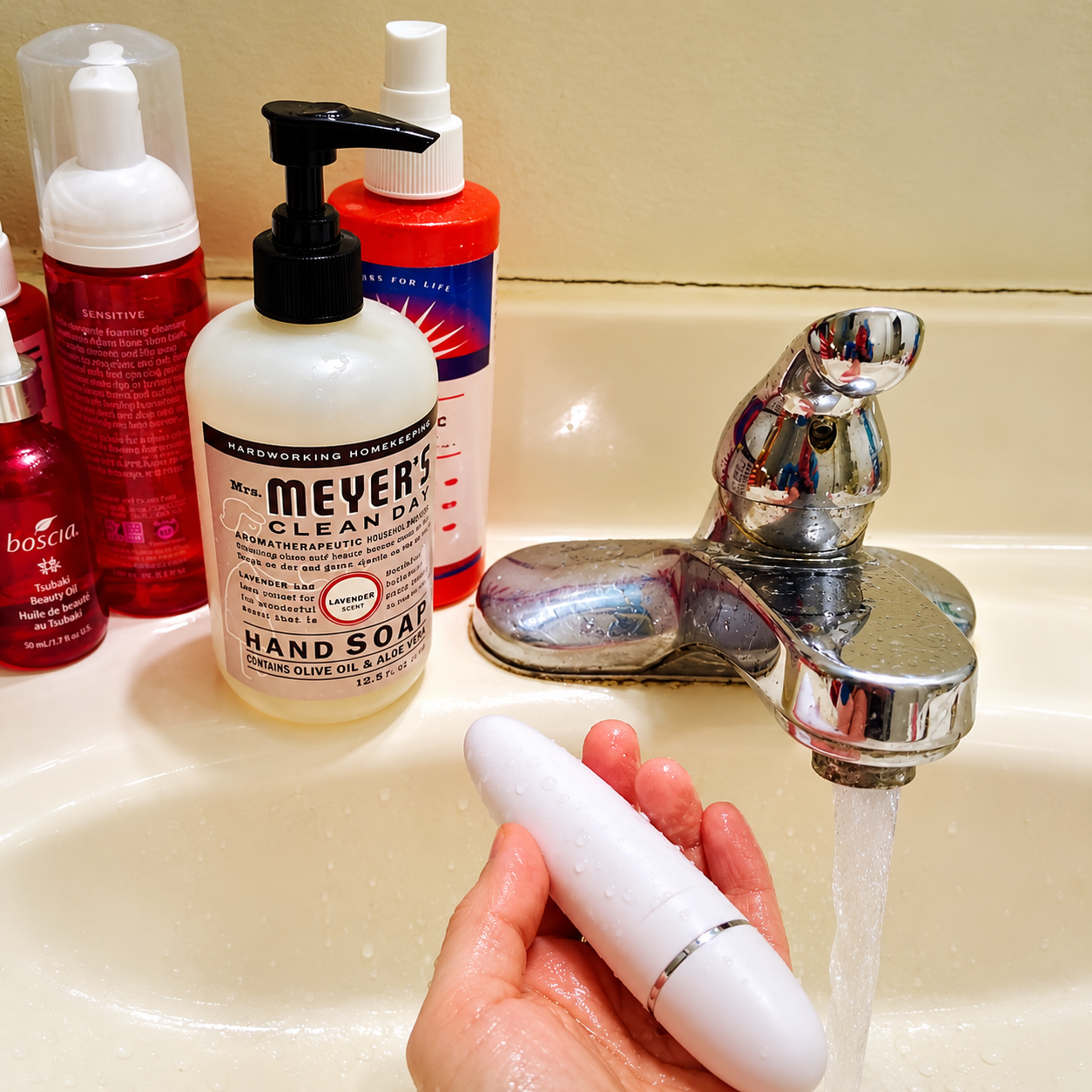
Motorised Units and Charging Ports
This is where you’ll cause most product damage if you’re not careful, not on the body of the toy itself. Cleaning technique and everyday operation go hand in hand, so it’s worth reviewing both together if you’re new to a motorised design.
Ratings, Ports and Contacts
An IPX rating tells you how well a sealed unit resists water ingress under specific test conditions, it isn’t a general invitation to soak, submerge or run your product under a tap regardless of the number attached to it. Confirm what the specific rating on your product actually covers before assuming more water exposure is fine than the spec supports.
Clean your motorised unit in this order: power it off first, unplug or disconnect it from any charging dock, then wipe the body with a damp cloth, keeping water away from charging contacts and any exposed ports entirely. Button membranes and speaker grilles are common failure points, water trapped underneath a membrane or inside a grille can corrode contacts or cause a button to stop responding well before the motor itself fails. Don’t take WINYI’s certification documentation, covered in more detail here, as a guarantee that your unit is immune to this kind of damage from misuse, a stated rating describes test conditions, not a warranty against every possible use case.
Drying and Storage
Drying is the step you’re most likely to skip, and it’s also the one that causes the most avoidable damage.
Drying Properly, Then Storing
A damp product sealed into a closed pouch or drawer is close to the worst-case scenario for any material, since trapped moisture keeps working on the surface long after you’ve finished cleaning it. Air dry fully before storage, every time, not just when you remember to.
Drying time varies by material, so budget accordingly. Non-porous surfaces, silicone, ABS, glass and steel, typically feel dry to the touch within a short window. TPE and other porous blends need noticeably longer, since moisture can sit in surface-level gaps even after the visible surface feels dry. Store products separated by material rather than touching each other, in a dust-free container or drawer, since two different materials in prolonged contact can degrade one or both surfaces over time. A dedicated storage routine is worth setting up as its own habit alongside cleaning, not an afterthought tacked onto the end of a wash.
Cleaning-Frequency Reference
Rather than bury frequency guidance inside a paragraph, here’s the reference table directly.
How to Read the Frequency Table
| Material | Routine Clean | Deep Clean | Frecuencia | Never Use | Replacement Trigger |
|---|---|---|---|---|---|
| Body-safe silicone | Warm water, mild soap, full rinse, pat dry | Boiling for several minutes, only where heat resistance is stated and there’s no motor or glued insert | After every use; deep clean before or after storage | Household disinfectant spray, abrasive pads | Tears, persistent odor, or tackiness that doesn’t rinse away |
| TPE | Warm water, mild soap, full rinse, thorough air dry | Dedicated cleaner, gentle wipe, extended dry time | After every use | Isopropyl alcohol, boiling water, abrasive pads | Any discoloration, texture change, or persistent smell |
| ABS or hard plastic | Warm water, mild soap, full rinse, pat dry | Diluted isopropyl alcohol wipe on non-electronic parts only | After every use | Boiling water, abrasive pads | Cracking, discoloration, or loose seams |
| Stainless steel or aluminium | Warm water, mild soap, full rinse, dry immediately | Boiling, or a diluted isopropyl alcohol wipe | After every use | Abrasive pads that scratch the finish | Visible pitting or corrosion |
| vidrio de borosilicato | Warm water, mild soap, full rinse, pat dry | Boiling | After every use | Sudden temperature swings that risk cracking the glass | Chips or cracks, however small |
| Motorised silicone with sealed motor | Power off, unplug, damp-cloth wipe, keep water off contacts | Follow the product’s own stated waterproof rating for anything beyond a wipe | After every use | Submersion beyond the stated rating, disinfectant spray near ports | Charging failure, port corrosion, or an unresponsive button |
Baseline is a routine clean after every use, with the deep clean applied on the schedule above rather than every time. Shared products and anything coming out of longer-term storage warrant the deep clean regardless of the routine schedule. The trigger for replacing a product is its surface condition, not its age, a well-cared-for toy can outlast one that’s simply newer but neglected.
Sourcing Adult Toys for Your Brand?
WINYI is an adult-toy OEM and ODM manufacturer in Shenzhen, producing silicone, TPE and ABS products with sealed motor housings and documented material specifications.
We support private-label branding, custom packaging and discreet retail presentation, and supply the surface-finish and material declarations buyers need for care instructions.
Wholesale: quote-ready specification sheets on request. OEM and ODM: tooling and sampling for custom geometries. Private label: your brand, our production.
Submit a specification or catalogue request through the enquiry form at szwinyi.com.
FAQ
How often should adult toys be cleaned?
Clean yours after every use, without exception, plus the deeper clean shown in the frequency table on the schedule that matches your material. Skip the routine step between uses and you turn a manageable clean into a harder one later.
Can you boil silicone toys?
Only where the manufacturer states heat resistance for that specific product, and only if there’s no motor, battery or glued-in insert. Otherwise, mild soap and warm water is the correct method for you, boiling anything without a stated heat rating risks damaging it.
Is soap enough, or do I need a dedicated cleaner?
Mild, fragrance-free soap is sufficient for routine cleaning of non-porous surfaces like silicone, ABS and stainless steel. Reach for a dedicated cleaner instead if you’re cleaning porous TPE or a coated or motorised product, where a purpose-built formula reduces the risk of degrading the surface or reaching electronic components.
How do I clean a motorised toy safely?
Power your unit off first, wipe the body with a damp cloth, and never submerge it unless the stated waterproof rating specifically allows for that. Keep water away from charging ports and buttons entirely, regardless of the rating printed on your packaging.
Can I use alcohol or household disinfectant?
Diluted isopropyl alcohol is suitable on non-porous, hard surfaces like silicone, ABS and stainless steel, but should be avoided on TPE and anything coated or soft. Skip household disinfectant sprays on any of these materials, since they’re formulated for household surfaces, not for something intended for direct, repeated contact with your skin.
How long should a toy dry before storage?
Until it’s fully dry to the touch, and expect that to take longer for TPE and other porous materials than for silicone, ABS, glass or steel. Storing anything even slightly damp is close to the worst outcome for it, so give yourself extra drying time rather than less.