

Water-based lubricant is the one you default to, because it is the only family that pairs with every toy material and every barrier you are likely to sell. Everything else in this lubricant compatibility guide is about the exceptions, and the biggest is silicone lubricant on a silicone product.
The Three Families: Water-Based, Silicone-Based and Hybrid
Lubricant compatibility means checking that a lubricant’s chemistry will not degrade the toy material or the barrier it is used with. Three families cover the shelf, and you can tell them apart by what carries the slip.
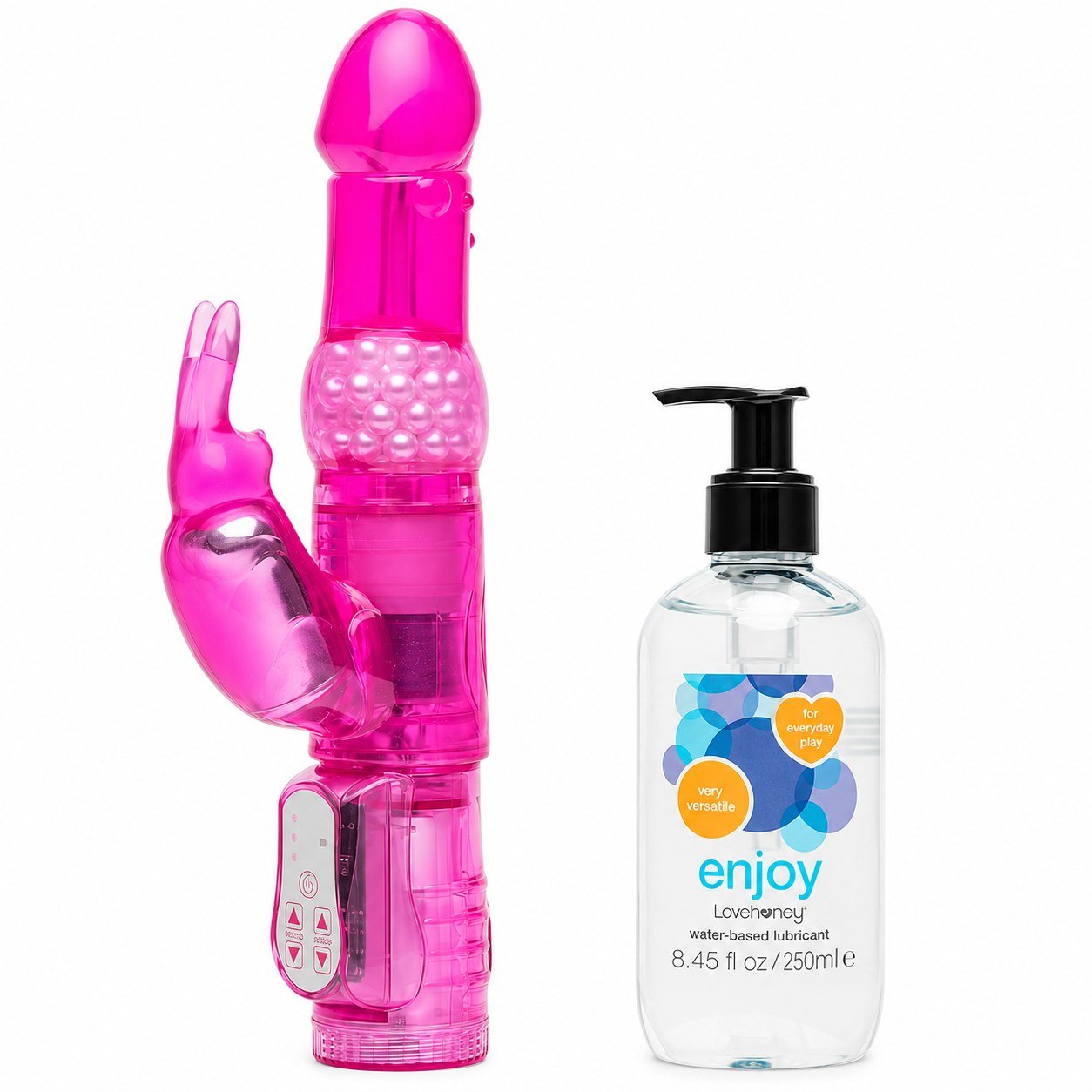
Water-based. Water with a humectant, a thickener and a preservative system. It dries as the water leaves, which is why you reapply.
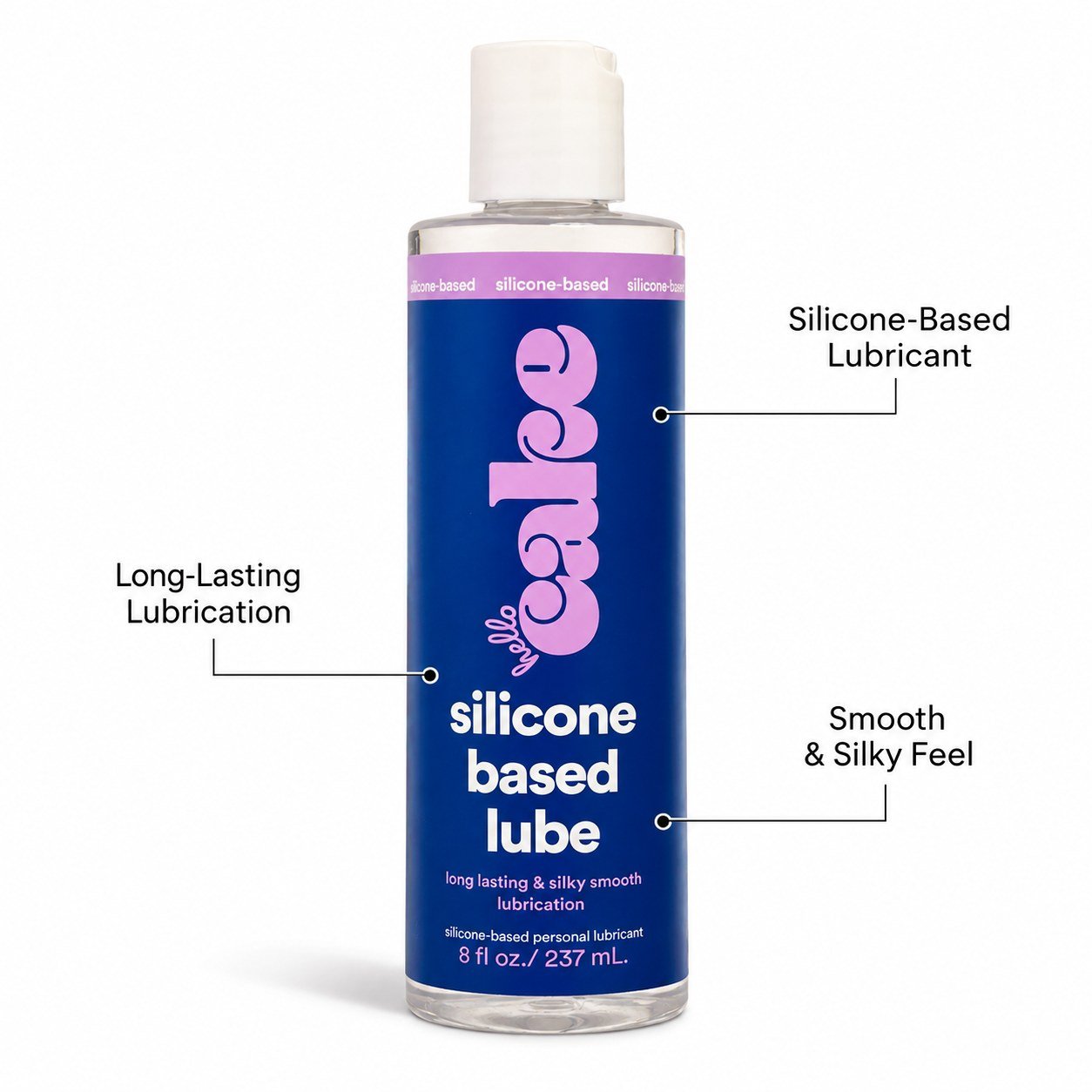
Silicone-based. Built on dimethicone, which is not absorbed and does not evaporate, so it stays slippery far longer.
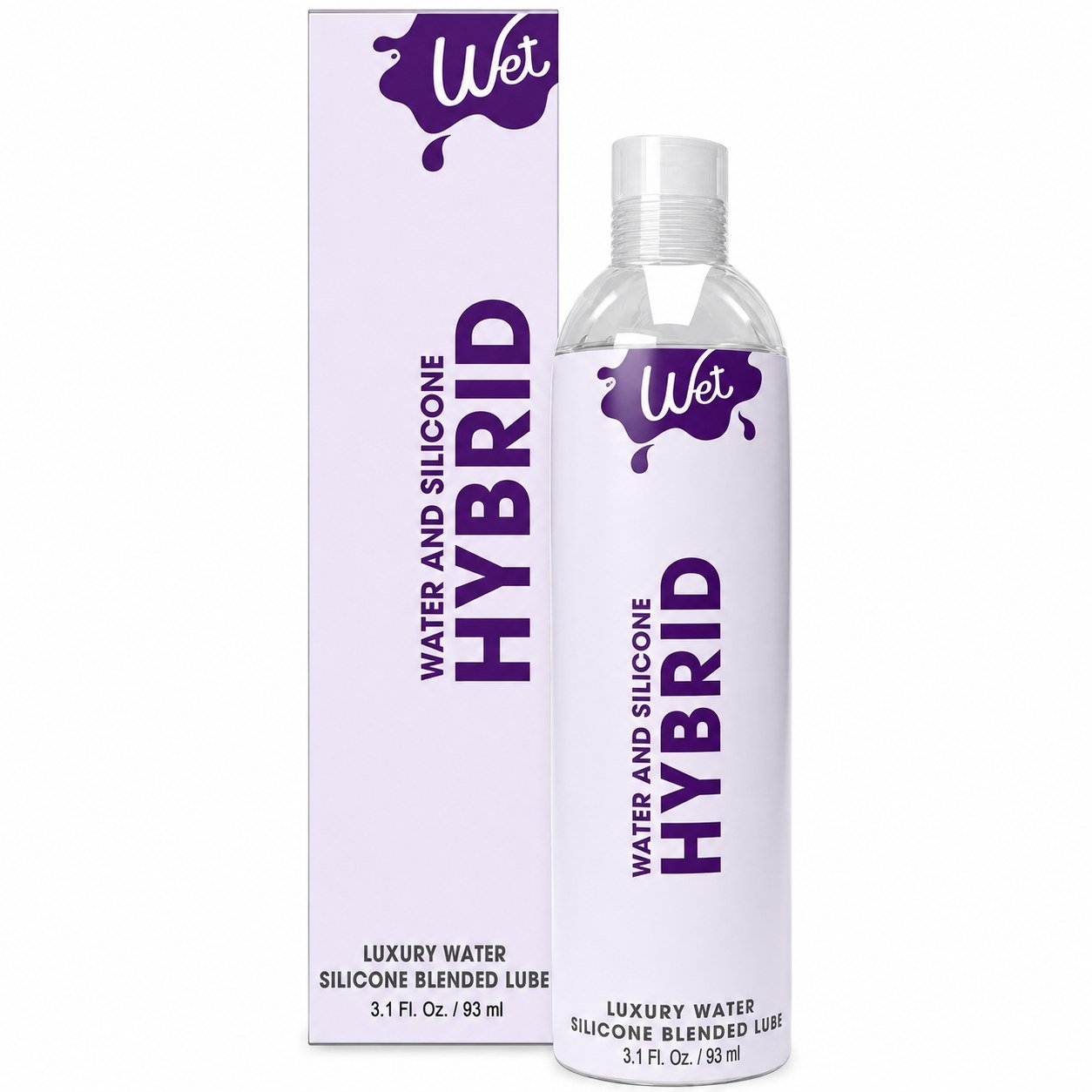
Hybrid. Water-based with a silicone component added. You get longer slip than water alone and you inherit the silicone caution below.
The reference specification is WHO Technical Report Series No. 1067, Annex 6, the WHO and UNFPA specifications for personal lubricants, which replaced the 2020 edition and sets the numeric limits an institutional buyer works to.
Where Each Family Performs Best
Match the family to the material you are selling rather than to the marketing. Water-based lube is what you put with a silicone toy and with a condom, and its only real cost is reapplication. Silicone-based belongs with glass, steel and ABS, and with longer sessions, and it is the one that marks sheets. Hybrid is the default when you do not know what the customer owns.
If your listing asks what the best lube for sex toys is, the honest answer is a question about the toy. WINYI’s silicone versus TPE guide gives the factory’s instruction, which is to test the finished product against the water-based, silicone-based and oil-based lubricants your customers use.
The Material-Compatibility Matrix
Table: lubricant and material compatibility matrix. Verdicts assume a finished product and its own care instructions.
| Lubricant Family | Silicona | TPE / TPR | Glass, Steel, ABS | Latex Condoms |
|---|---|---|---|---|
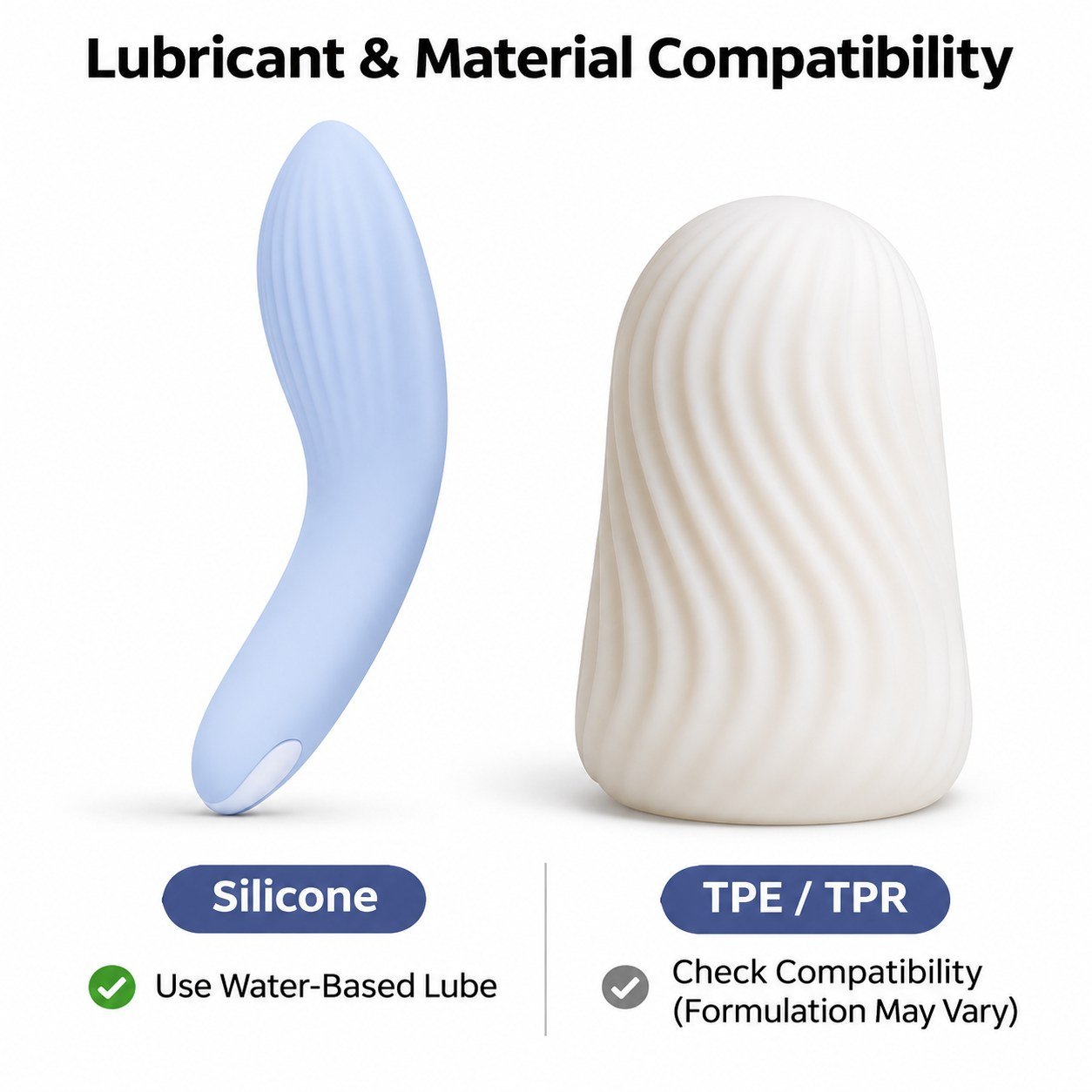
| Water-based | Compatible, the default pairing | Compatible, rinses off soft surfaces | Compatible, no reaction | Compatible, safe with latex |
| Silicone-based | Avoid, can damage solid silicone | Test first, formulations differ | Compatible, best for long sessions | Compatible, safe with latex |
| Hybrid | Test first, it contains silicone | Test first, formulations differ | Compatible, no reaction | Compatible, safe with latex |
| Oil-based | Avoid, no compatibility evidence | Avoid, oils attack soft blends | Compatible on hard surfaces | Avoid, oil degrades latex |
Rows are families and columns are the material or barrier, so you read across from whatever is in your hand. A cell says compatible, avoid or test first, and test first means the pairing depends on the formulation, so a patch test on a hidden surface is your only confirmation.
The Silicone-on-Silicone Problem
This is the pairing you get asked about most. On silicone lube with silicone toys, Planned Parenthood is direct: do not use silicone lubricant with silicone toys unless you put a condom on them, because silicone lubricant can react with the solid silicone in the toy and damage it.
WINYI’s own guide to using sex toys gives customers the same instruction in one line, which is to use a water-soluble lubricant rather than a silicone oil-based one, and it lists water-based only against body-safe silicone in its material and lubricant compatibility table.
Silicone elastomers differ by grade and by cure system, and WINYI’s material guide ties performance to grade, cure, construction and finish rather than to the word silicone. So patch test, and if you are specifying a product, ask the factory to run the pairing you intend to sell.
Ingredients to Avoid
Irritants and sensitizers. The WHO and UNFPA specification is where you should start, because it sets limits rather than opinions. Osmolality shall be less than 1200 milliosmoles per kilogram of water, and it notes that this can be achieved by keeping total glycol content below about 8.3 percent by mass. pH shall sit between 4.0 and 7.0, with a tolerance of plus or minus 1.0.
The same specification requires a lubricant to be free from added fragrance, color, spermicides, herbal ingredients and ingredients claiming pleasure-enhancing properties. Nonoxynol-9 is a spermicide, so it sits outside that specification too.
Glycerin and parabens appear on almost every retailer’s free-from list, which is a marketing position rather than a published limit. If a customer asks what the best lube for sex toys avoids, point at the osmolality and pH numbers rather than a free-from badge.
Regulatory and Labeling Traps
Which rulebook applies depends on what you claim rather than what the product is. A lubricant with no therapeutic claim is usually handled as a cosmetic in the EU, and a treatment claim can push it toward a medical device route, so have an EU regulatory specialist confirm it before you print artwork.
On the cosmetic route, Regulation (EC) No 1223/2009 requires an ingredient list, introduced by the word ingredients and ordered by descending weight, and durability information on the label. Where minimum durability runs beyond 30 months, the consumer has to be told the period of time after opening. Treat hypoallergenic claims as evidence you have to hold, and check the INCI list, batch code and date before you approve a sample.
How Much to Use and When to Reapply
Dose and reapplication. Start with less than you think and add, because adding is easy and a flooded surface is not. Cleveland Clinic, quoting gastroenterologist Michelle Inkster, MD, PhD, puts the reapplication rule plainly: if anything feels uncomfortable, use more.
With water-based you will reapply, and the signal is the feel changing from slippery to tacky. A little water revives it briefly, which is worth printing on the pack. With silicone-based you will rarely need a top-up.
Storage and expiry after opening. Silicone-based keeps longest, and your water-based line has the shorter life because water and preservatives age. Store away from heat and sunlight, and never decant into an unlabeled bottle, because you lose the batch code and the expiry together. Treat a change in smell, color or texture as the end of its life.
Compatibility with Condoms and Barriers
Latex, polyisoprene and polyurethane. The barrier rule is the firmest one you will apply. la guía de Planned Parenthood is to use only water-based or silicone lubricant with latex condoms, and not anything with oil, because oil can damage latex. The NHS says the same in one line, which is not to use oil-based lubricant with latex condoms and to use water-based or silicone-based instead.
Non-latex is where you have to read the pack. Planned Parenthood says water-based and silicone lubricant work with any plastic condom, that oil-based lubricants are generally usable with plastic condoms except polyisoprene, and that any lubricant including oils works with lambskin. Its own instruction is to check the condom package or the brand website, and that is the line to repeat.
Table: barrier materials and lubricant pairing.
| Barrier Material | Compatible Lubricant | Evitar |
|---|---|---|
| Latex | Water-based, silicone-based | Anything oil-based |
| Polyisoprene | Water-based, silicone-based | Oil-based |
| Polyurethane and other plastics | Water-based, silicone-based, oil generally usable | Check the pack first |
| Lambskin | Any family, including oils | No lubricant restriction stated |
The WHO and UNFPA specification adds the manufacturer-side version of this: a lubricant shall be compatible with male and female condoms, with any exception noted in the labeling, and it names ASTM D7661, ISO 19671:2018 and ISO/TS 23148:2024 as the test routes.
Safety Wording
Keep your claims narrow. Lubricant reduces friction, and that is the whole of what you say. A lubricant is not a contraceptive and not a treatment, so no listing of yours should imply either. Print the pairing guidance on your pack, because the pack is what the customer has in hand.
Sourcing and Private Label: What Buyers Must Specify
What to put in a lubricant brief. A lubricant brief is short, and eight lines carry it: the target market, the toy material it will be paired with, the family, the pH target, the osmolality limit, viscosity, the preservative system, and your fragrance policy. The WHO and UNFPA specification gives you ready-made numbers for three of those, including a water-based viscosity range of 5,000 to 20,000 centipoise and a minimum of 30 percent dimethicone for a silicone product.
State the claims you intend to make in the same document, because formulation, classification and labeling all follow from them. Lubricant compatibility testing belongs in the brief too, named against the exact toy material you sell.
Documents to request. Ask for five things per formulation: the INCI list, the safety assessment, stability data, the compatibility test report against your material, and the batch documentation. If your product is device-classified, ask for the technical file and the quality-system certification that goes with it.
Then sample properly, with units from two separate batches before you approve artwork, because one batch tells you nothing about consistency. WINYI’s guide on how to clean adult toys covers the residue side.
Planning a Lubricant or a Paired Bundle?
WINIY is an adult-toy OEM and ODM manufacturer in Shenzhen producing silicone, TPE and ABS products, and a personal lubricant line is under evaluation rather than in production, so treat this as the specification conversation rather than a catalog.
What you can get today is the pairing evidence. Send the material and finish of the product you are bundling and the lubricant families your market expects, and the factory can test the finished product against water-based, silicone-based and oil-based lubricants and report what happens to that surface. WINYI’s service page sets out the material and packaging side.
Register interest in private-label lubricant, or ask for a material compatibility report, through the wholesale and OEM enquiry form. Tell us the market, the volume and the claims you want to make, since those three decide the labeling route. Lubricant compatibility is the cheapest returns problem you will ever fix, and it is fixed on the pack.
Request a Lubricant Compatibility Report – Vea nuestras capacidades de fabricación OEM y ODM
Material and finish matching – compatibility testing against water-based, silicone-based and oil-based lubricants – market-specific labeling review
FAQ
Does silicone lube damage silicone toys?
Often yes. Planned Parenthood says not to use silicone lubricant with silicone toys unless the toy is covered with a condom, because it can react with the solid silicone. Use water-based on your silicone products.
Is water-based lube the safest choice?
For toys and barriers it is the least likely to cause a problem, and Planned Parenthood calls it a safe bet with any toy and any condom. The trade-off you accept is reapplication.
Can you use oil-based lube with condoms?
Not with latex. Both Planned Parenthood and the NHS say oil can damage latex condoms and to use water-based or silicone-based instead. Oil is generally usable with plastic condoms other than polyisoprene.
How much lubricant should you use?
Start with less than you think and add as you go. Cleveland Clinic’s rule is that if anything feels uncomfortable you use more. A flooded surface is harder to work with than a dry one.
Do you need to reapply during use?
With water-based lubricant, yes, and the signal is the feel changing from slippery to tacky. A little water revives it briefly. With silicone-based you will rarely need a top-up.
What ingredients should a lubricant avoid?
The WHO and UNFPA specification requires one to be free from added fragrance, color, spermicides, herbal ingredients and pleasure-claim ingredients, and it limits osmolality to under 1200 mOsm/kg.
Is lubricant safe with TPE toys?
Water-based is your safe pairing, and hybrid is usually workable. Test a silicone-based product on a hidden area first, because TPE performance varies with the formulation, the oil package and the finish.