
A vibrator is a motorised adult product that delivers mechanical stimulation. The main types of vibrators are bullet and egg, wand massager, rabbit, G-spot, suction (air-pulse) and thrusting, each defined by its stimulation target rather than its price. If you’re building a range, those six form factors are the shortlist, and the fields that separate them (motor, power and waterproof rating) are the same fields you’ll write on a purchase order.
How a Vibrator Actually Works: Motor, Frequency and Amplitude
How do vibrators work? Every one of the types of vibrators below comes down to three variables, and you can read all three off a good spec sheet.
The three variables. Motor type decides how your product makes its vibration. Frequency, measured in hertz (Hz), is how many times per second the surface moves, and it sets whether the feel reads as a high buzz or a low rumble. Amplitude is how far the surface moves on each cycle, the depth of the vibration. Motor makers usually rate amplitude as acceleration in g rather than displacement in millimetres, so ask which unit a supplier is quoting before you compare two numbers.
For the common eccentric-mass motor, you can treat frequency and speed as the same thing. Precision Microdrives, a vibration-motor manufacturer, puts it simply: divide the motor’s RPM by 60 and you get the vibration frequency in Hz. The same source notes that amplitude and frequency are linked in this motor type, so you can’t raise one without moving the other, and that at equal amplitude a slower motor displaces the surface further.
You can apply that to real WINYI parts. The WY0726 bullet lists a motor running at 11,500 rpm, roughly 192 Hz. The WY0743 wand lists a loaded speed of 5,200 rpm, roughly 87 Hz. That gap is the buzz-versus-rumble difference you’ll hear buyers describe, expressed as numbers you can put in a specification.
Motor architecture. You’ll meet two motor families in this category:
Eccentric rotating mass (ERM): a small DC motor spins an off-centre weight. You’ll find it in WINYI’s WY0726 bullet and WY0743 wand, and a dual-motor rabbit carries two motors, one in the shaft and one in the external arm.
Linear resonant actuator (LRA): a magnet and mass move on a spring, driven at one resonant frequency. Precision Microdrives lists typical Y-axis LRA resonance at around 175 to 235 Hz, which makes it a narrow-band part rather than a variable-speed one.
Thrusting products add a third mechanism. A linear drive turns rotation into in-and-out travel, so you specify that part by stroke length and strokes per minute rather than by hertz.
The Six Form Factors, Dissected One by One
Each of the six types of vibrators below follows one template, so you can compare them line by line: what it is, what it targets, the typical motor and size, who it suits, what to check, and where to source it.
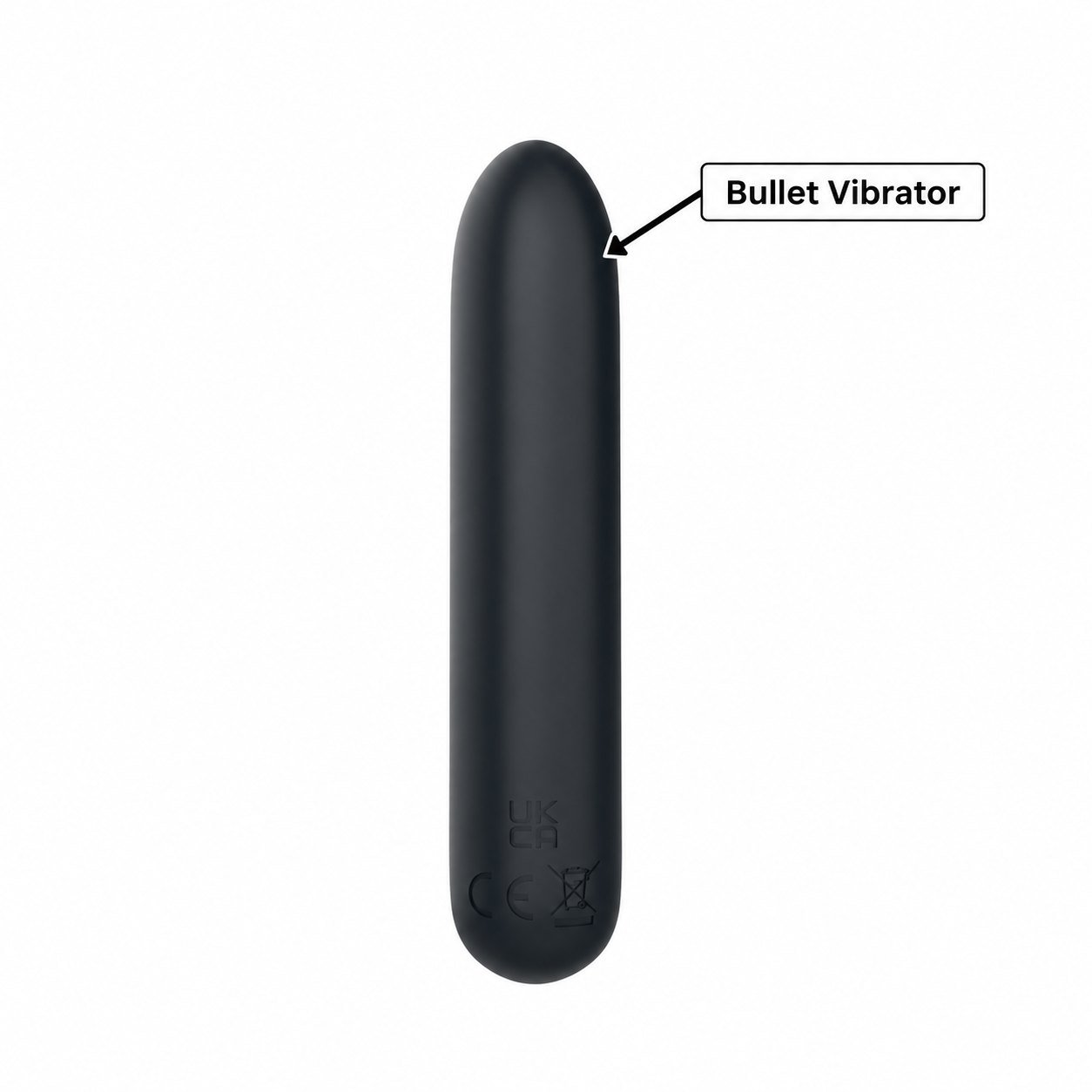
Bullet vibrators and love eggs. A bullet vibrator is the smallest form factor: a single compact motor in a sealed capsule, built for pinpoint external use. The love egg variant moves the same idea into an egg-shaped body for internal use, usually with a cord or a wireless remote.
WINYI’s WY0726 Abby bullet shows you the scale. It measures 94 x 19.5 x 19 mm, weighs about 37.5 g, runs 20 modes from an 11,500 rpm motor and a 240 mAh lithium cell, carries IPX7 and lists no more than 55 dB at 30 cm. The WY0554 Kitty remote love egg pairs liquid silicone with a 270 mAh cell, IPX7 and no more than 50 dB at 30 cm.
What you should check: noise at a stated distance, how the charging pin or contacts are sealed, and for eggs, the remote’s pairing and the cord’s anchor point.
Both models run on private-label and OEM routes, so send the two SKUs you want quoted rather than picking one blind.
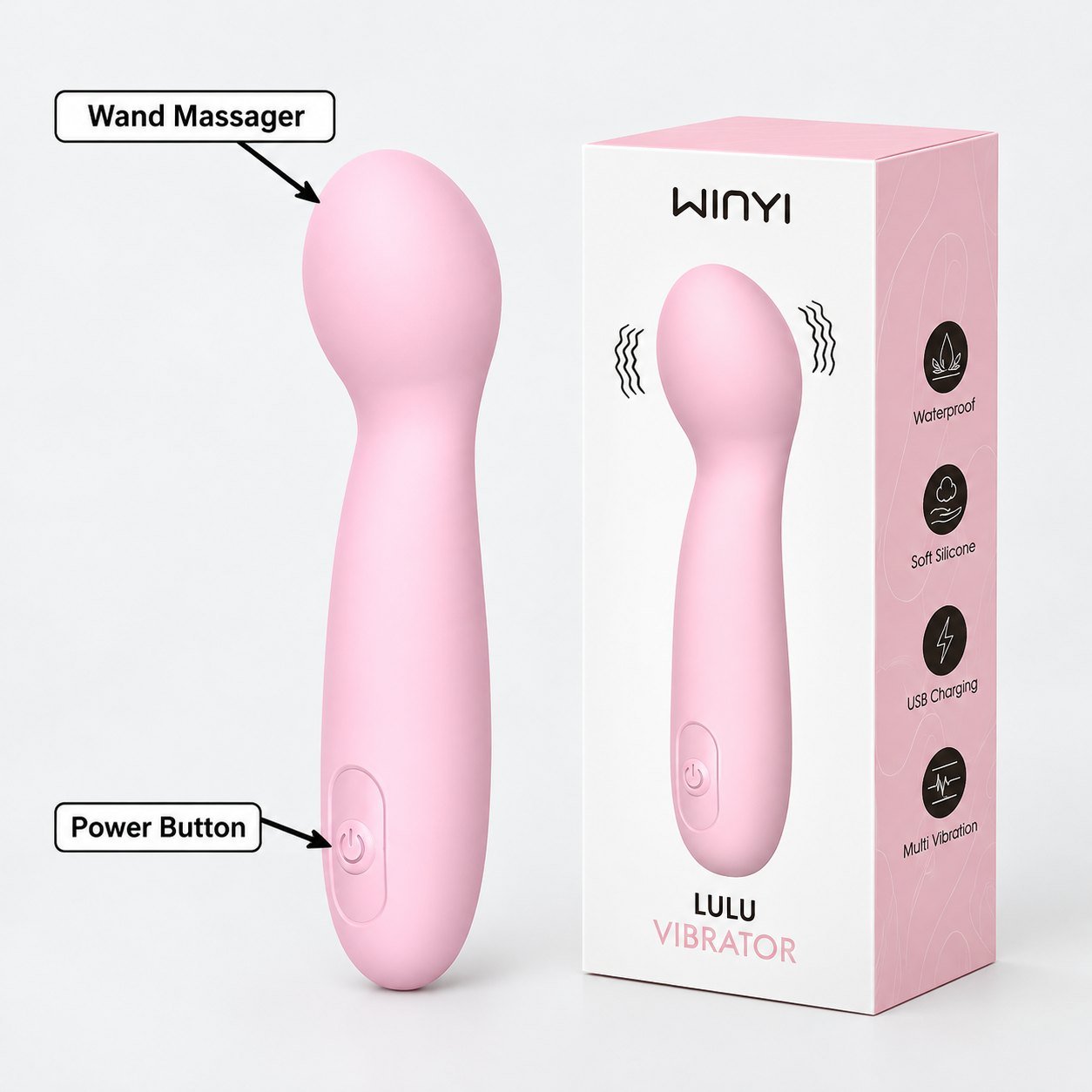
Wand massagers. A wand massager puts a broad head on a larger, higher-torque motor, so you get wide coverage and a deeper, lower-frequency feel. Length comes from the handle, which also holds a larger battery.
El WY0743 wand runs a 310-size motor at a loaded 5,200 rpm from a 1,000 mAh lithium cell, lasts at least 60 minutes per charge and lists no more than 60 dB at 30 cm. At the other end, the WY0424 VIVI mini wand measures 130 x 40 mm and runs on two AAA batteries at IPX6, which shows you that wands still come in disposable-battery formats.
What you should check: head material and firmness, motor heat after a full run, and the waterproof rating in the spec table, since one WINYI wand listing quotes IPX5 in its table and IPX7 in its description.
WINYI’s massager category lists 11 wand-type models, so quote the head size and battery you need rather than taking the first spec sheet you’re sent.
Rabbit vibrators. A rabbit vibrator combines an internal shaft with an external arm, each driven by its own motor so you can run them independently. Fit, not silhouette, decides whether dual stimulation works. If the arm doesn’t land where it should on the target customer, the second motor adds cost to your unit without adding value.
WINYI’s WY0716 Alisa triple rabbit uses a dual-motor layout with 10 modes, a 700 mAh cell, magnetic charging, IPX7 and no more than 50 dB at 30 cm, and its page lists MSDS, RoHS and UN38.3 documentation. Its two size tables don’t agree, so ask for a measured drawing before you plan packaging around it.
What you should check: the distance between shaft and arm, arm flexibility, and whether both motors can be controlled separately.
Ask for that drawing first, then quote the arm gap and motor count you actually want.
G-spot vibrators. When buyers ask for a g spot vibrator, they mean a curved shaft angled toward the anterior vaginal wall, usually with one strong motor near the tip. The curve is the product. Treat it as a shape decision, and keep every claim about outcomes off your box.
WINYI’s WY0748 10-mode G-spot vibrator measures 161 x 33 x 33 mm, weighs about 96 g, runs 10 modes from a 300 mAh cell, lasts at least 50 minutes, carries IPX5 and lists no more than 52 dB at 30 cm.
What you should check: the curve angle on a drawing, the softness of the silicone over the tip, and where the motor sits in the shaft.
Compare the curve on a drawing, then quote the shaft angle and insertable length for your market.
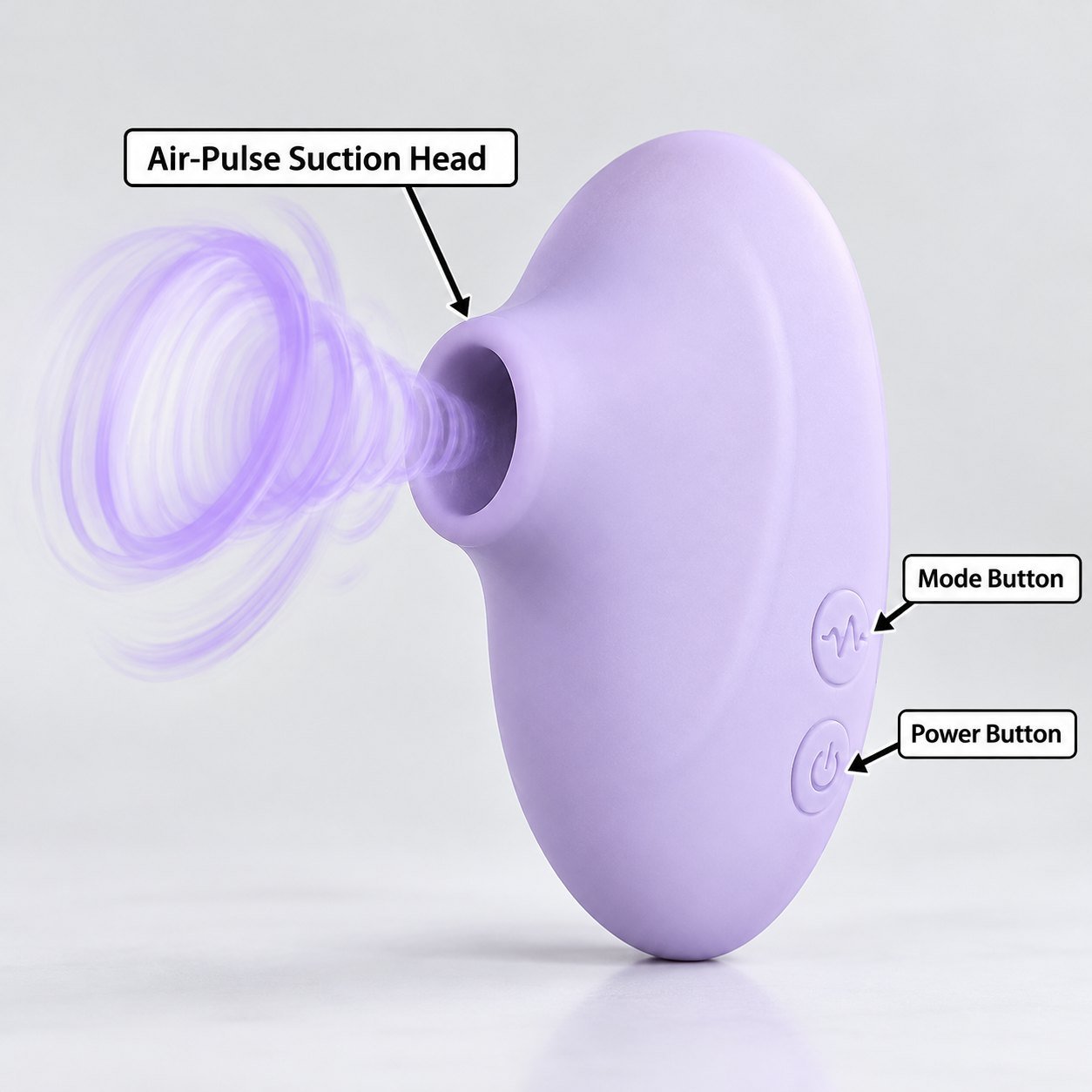
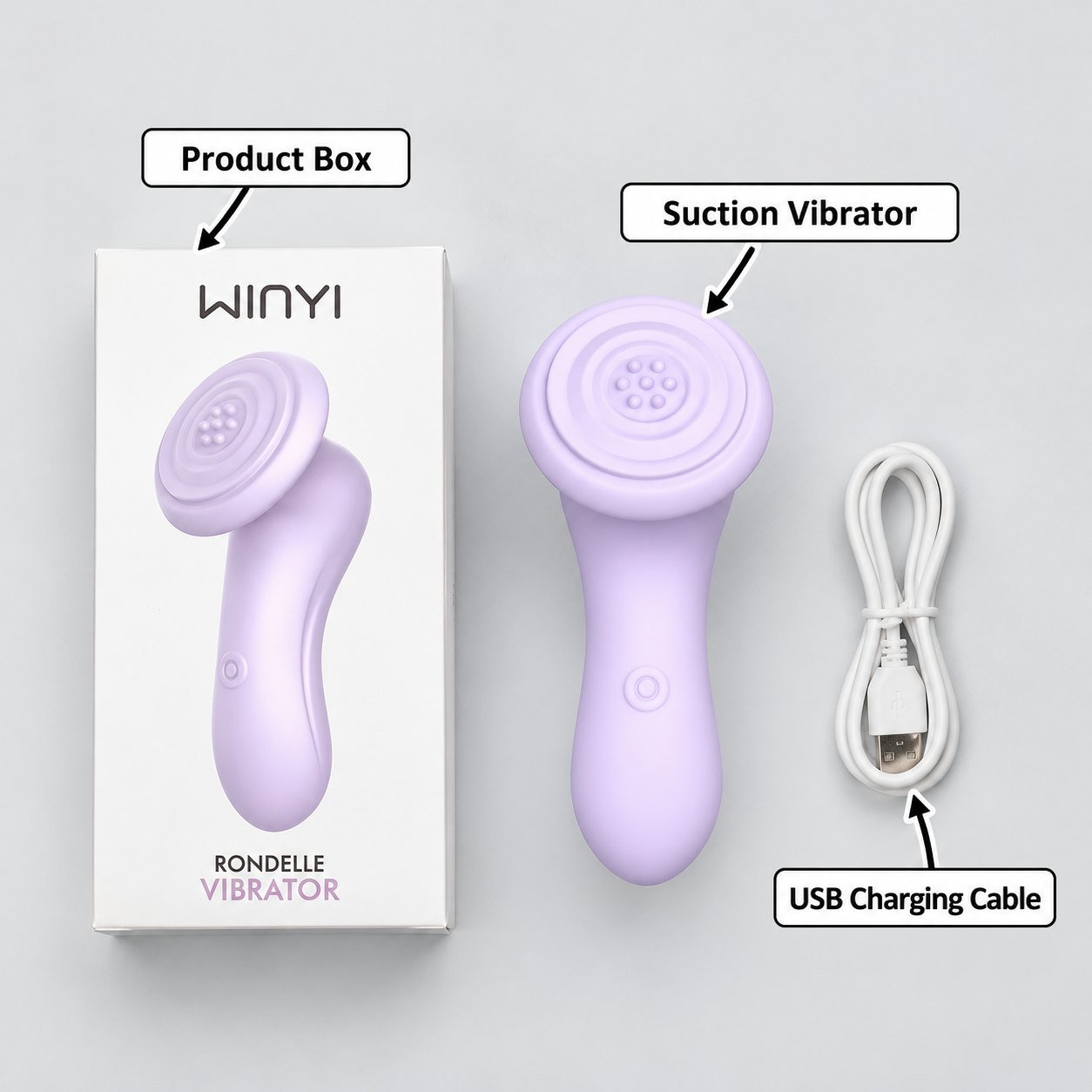
Suction (air-pulse) vibrators. A suction vibrator is a naming problem. Most models don’t pull a true vacuum. They pulse air through an open nozzle, using a pump and a sealed chamber to create rhythmic pressure changes, and the nozzle’s diameter changes how widely the pulse spreads.
WINYI’s WY0735 five-level suction stimulator offers five air-pulse levels from 40% to 80%, lists no more than 60 dB at 30 cm, carries IPX5 (splash-resistant, not for immersion) and runs at least 60 minutes from a 170 mAh cell. The WY0635 whale suction stimulator pairs 10 suction modes with 10 vibration modes at no more than 55 dB at 30 cm and IPX6.
What you should check: nozzle diameter, whether the nozzle comes off for cleaning, pump noise at a stated distance, and the ingress rating, since an open nozzle is harder to seal than a closed capsule.
Benchmark both against your own nozzle diameter, then quote the pump and ingress rating you need.
Thrusting vibrators. A thrusting vibrator adds a linear drive that produces in-and-out travel, usually alongside a vibration motor. You specify it by stroke length and strokes per minute, the two numbers a vibration-only spec sheet never needs.
WINYI’s WY0707 deer-horn thrusting vibrator runs 10 thrusting modes and 10 dual-head vibration modes from a 650 mAh cell with magnetic charging, carries IPX6 and lists no more than 60 dB at 30 cm. Its page doesn’t state stroke length or strokes per minute, so put both on your request before you sample.
What you should check: stroke length, strokes per minute at each speed, noise under load and how the moving section is sealed.
WINYI builds thrusting models in deer-horn, bird-wand y expanding formats, so quote the format you want rather than the first one listed.
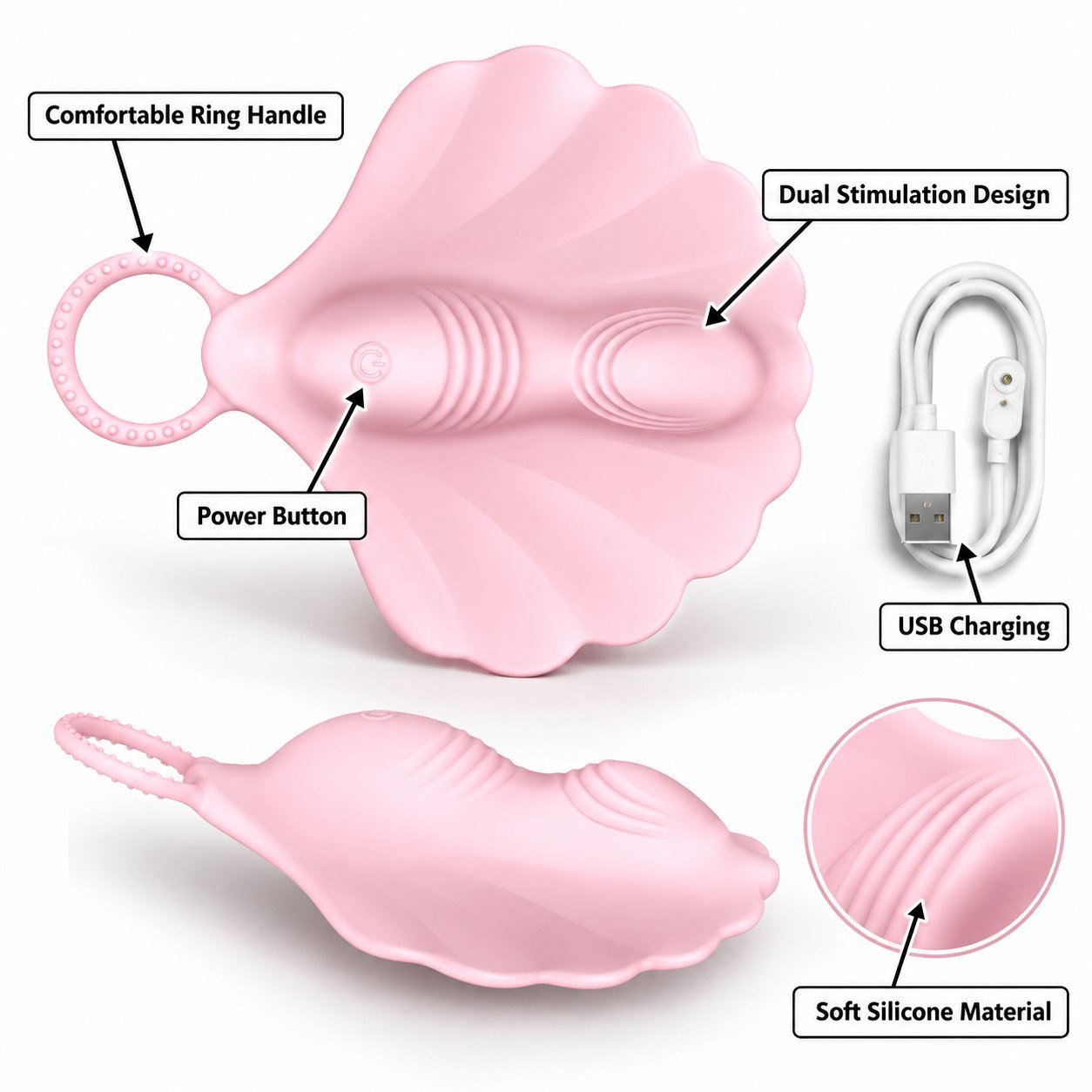
The six form factors with the model this guide cites for each, so you can price a line from one table.
| Form Factor | Model Cited In This Article | Key Figures To Put On A PO |
|---|---|---|
| Bullet and love egg | WY0726 Abby bullet · WY0554 Kitty love egg | 94 x 19.5 x 19 mm · 240 mAh · IPX7 · max 55 dB at 30 cm |
| Masajeador de varilla | WY0743 wand · WY0424 VIVI mini wand | 5,200 rpm loaded · 1,000 mAh · 60 min+ · IPX6 to IPX7 |
| Rabbit | WY0716 Alisa triple rabbit | 700 mAh · magnetic charging · IPX7 · max 50 dB at 30 cm |
| G-spot | WY0748 10-mode G-spot | 161 x 33 x 33 mm · 300 mAh · IPX5 · max 52 dB at 30 cm |
| Suction (air-pulse) | WY0735 five-level · WY0635 whale | 170 mAh · IPX5 and IPX6 · max 60 dB at 30 cm |
| Empuje | WY0707 deer-horn | 650 mAh · magnetic charging · IPX6 · max 60 dB at 30 cm |
The same six form factors compared on the fields that decide a purchase order.
| Form Factor | Primary Stimulation | Typical Motor | Size Range | Potencia | Waterproof Target | Best Suited To |
|---|---|---|---|---|---|---|
| Bullet and love egg | Pinpoint external, internal for eggs | Single compact rotary motor | Smallest, palm-sized capsule or egg | Rechargeable lithium, pin or magnetic | IPX6 to IPX7 | Entry ranges and travel |
| Masajeador de varilla | Broad external | Larger high-torque rotary motor | Longest, handle plus broad head | Rechargeable lithium or disposable AAA cells | IPX5 to IPX7 | Depth over precision |
| Rabbit | Dual, internal and external | Two motors, shaft and arm | Mid-length shaft with external arm | Rechargeable lithium, magnetic or pin | IPX6 to IPX7 | One device, two targets |
| G-spot | Internal, targeted placement | Single motor near curved tip | Mid-length curved shaft | Rechargeable lithium, pin or magnetic | IPX5 to IPX7 | Targeted internal use |
| Suction (air-pulse) | Pinpoint external, no direct contact | Air pump, sometimes plus vibration | Compact, palm-sized body | Rechargeable lithium, magnetic or pin | IPX5 to IPX6 | Second line beside vibration |
| Empuje | Internal motion plus vibration | Linear drive plus vibration motor | Mid to long body | Higher-capacity rechargeable lithium | PIX6 | Motion-led, higher price points |
Six vibrator form factors compared. Ranges reflect WINYI product listings reviewed in October 2026, so treat them as a starting point and confirm each figure against the model you sample.
Want this table matched to your own price band? Send WINYI your target market and form factors through the quote block below.
Who Each Form Factor Suits
Start with the preference, then match it to one of the types of vibrators:
Broad external: wand massager.
Pinpoint external: bullet vibrator, or a suction vibrator if your customer prefers no direct contact.
Internal: G-spot vibrator or love egg.
Dual: rabbit vibrator.
Motion: thrusting vibrator.
You can also split a range by experience level, with one starting form factor each:
| Customer Level | Starting Form Factor | Why It Starts There |
|---|---|---|
| Beginner | Bullet vibrator or air-pulse stimulator | Small size and simple controls |
| Intermediate | Wand massager or G-spot vibrator | More power or a targeted internal shape |
| Advanced | Rabbit or thrusting vibrator | Two motors or added motion |
Starting points, not rules. Confirm the lowest speed setting on each sample, since a gentle first setting matters more for a beginner range than peak power.
Power Options: USB Rechargeable, Magnetic Charging and Battery
Architecture and sealing. You’ll see three power architectures, and each one changes what the housing has to seal:
Disposable batteries: a battery door you have to gasket, plus a running cost for your customer.
Plug-in charging: a USB-C socket or a small DC pin port. Either way you have an opening in the housing that needs its own seal.
Magnetic charging: two flush contacts and no open port, which leaves less for water to get past.
That logic only holds if the design follows through, so you should judge each model by its test report, not by its charging type. WINYI’s own listings show you the overlap:
| Power Architecture | How It Charges | What It Means For Sealing | WINYI Examples And Rating |
|---|---|---|---|
| Disposable battery | AAA cells behind a door | Door gasket carries the seal | WY0424 mini wand, IPX6 |
| Pin charging | Cable with a 15 to 17 mm pin | Pin port needs its own seal | WY0748 IPX5, WY0635 IPX6, WY0726 IPX7 |
| Magnetic charging | Flush contacts, magnetic cable | No open port to seal | WY0735 IPX5, WY0707 IPX6, WY0716 IPX7 |
| USB-C socket | Standard USB-C cable | Open socket needs a cover or sealed port | Not among the WINYI models reviewed |
Ratings from each model’s WINYI product page, October 2026. Charging type alone doesn’t set the rating, so request the test report for every SKU.
Commercial facts. Four battery numbers belong on every purchase order:
Cell type and capacity: WINYI’s listings run from a 170 mAh cell in the WY0735 to 1,000 mAh in the WY0743 wand.
Charge time: from about 90 minutes to as long as 210 minutes in the listings reviewed.
Runtime: at least 40 to at least 70 minutes per charge across the same models.
Transport documentation: IATA’s lithium battery fact sheet says manufacturers and distributors of equipment containing lithium cells must make available a test summary showing the cells passed UN 38.3. From 1 January 2026, batteries packed with equipment must also ship at no more than 30% state of charge by air, and IATA’s battery guidance document recommends the same limit for batteries installed in equipment.
Ask for the UN 38.3 test summary and the MSDS before your first shipment, not after a forwarder rejects the booking.
How to Read IPX Waterproof Ratings
The IP code comes from IEC 60529, and the IEC’s own summary lists what each water step means. When you source vibrators, four steps matter:
IPX4: protected against splashing water.
IPX6: protected against powerful water jets.
IPX7: protected against the effects of temporary immersion. The standard’s test sits between 0.15 m and 1 m, and WINYI’s in-house lab runs its IPX7 check at 1 metre for 30 minutes.
IPX8: protected against continuous immersion, under conditions the manufacturer and user agree.
IPX5 sits between them (water jets), and you’ll see it on several suction and G-spot listings.
Treat IPX7 as a test condition, not a lifetime guarantee. Seals age, and the test uses water under set conditions, so it tells you nothing about salt water or lubricant getting past a seal. Match the cleaning instructions you print to the rating you can prove: an IPX5 product shouldn’t be submerged for cleaning, and even an IPX7 product should dry fully before storage. Then request the test report rather than accept the claim you see on a listing.
A Buying Checklist
Use this checklist to compare types of vibrators on the same eight fields before you shortlist a supplier.
The eight checks.
| Verificar | Por qué importa |
|---|---|
| Stimulation type | Sets the form factor and the customer it serves |
| Motor character | Frequency and amplitude decide buzz versus rumble |
| Size and fit | Fit decides whether a shape works for the target customer |
| Material | Body-safe silicone or ABS changes feel, cleaning and cost |
| Potencia | Battery architecture sets sealing, runtime and transport documents |
| IPX rating | Sets the cleaning instructions you can safely print |
| Ruido | Discretion matters, so compare dB at a stated distance |
| Garantía | Sets your returns exposure after the sale |
WINYI’s massager category states a six-month warranty from delivery. Confirm the term for each SKU you order.
The supplier-facing version. When you move from shortlist to supplier, ask for five things:
Specification completeness: motor speed, battery model and mAh, charge time, runtime, noise at a stated distance and IPX rating on every sheet.
Test reports: the IPX test, the UN 38.3 summary, MSDS and the CE or RoHS reports for your market.
MOQ bands: WINYI’s product FAQs quote 50 pieces without customisation and 1,000 pieces with your colour or logo, while its Services page lists selected production-ready models from 100 pieces. Ask which band applies to the exact SKU and route you want.
Tooling impact: private label on an existing model needs no new tooling, while a custom shape adds mold development to the schedule.
Lead-time range: WINYI’s product FAQs give stock items within 7 business days and customised orders 30 to 35 days after the production sample is approved, plus tooling time for new designs. Treat every figure as conditional on your specification and volume.
If you want to go beyond stock models across these types of vibrators, start with WINYI’s custom vibrator manufacturing routes: OEM, ODM, private label and custom mold.
Sourcing Vibrators for Your Own Brand?
Tell us your target market, price band and form factors. We will confirm what is feasible at your volume and send matching specification sheets.
Request a Wholesale or OEM Quote – See custom vibrator manufacturing
Six product lines manufactured in house – body-safe silicone and ABS – compliance documentation on request – NDA and tooling ownership agreed before production
FAQ
What are the main types of vibrators?
The six main types are the bullet and egg for pinpoint or internal use, the wand massager for broad coverage, the rabbit for dual stimulation, the G-spot vibrator for targeted internal placement, the suction (air-pulse) vibrator for contact-free external use, and the thrusting vibrator for motion. They differ by stimulation target and motor, not by price.
Which type of vibrator is best for a beginner?
A bullet or an air-pulse device is where you’d usually start a beginner range, because both are small and simple to control. A low first speed setting matters more for a beginner than peak power, so check it on the sample.
What is the difference between a wand massager and a bullet vibrator?
A wand covers a broad area, while a bullet targets a small one with precision. The motor explains the difference: a wand runs a larger, slower, higher-torque motor, and a bullet runs a compact motor at a much higher speed.
Do suction vibrators actually use suction?
Most don’t create a true vacuum. They pulse air through a nozzle, and the nozzle’s diameter changes the pulse your customer feels.
Are rabbit vibrators better than G-spot vibrators?
No, they answer different preferences. A rabbit adds an external arm and a second motor, while a G-spot vibrator focuses on one curved shaft, and fit decides which one works for a given customer.
What does IPX7 mean on a vibrator?
IPX7 means the product passed a temporary-immersion test under set conditions. It doesn’t cover salt water, lubricant or seals that have aged, so match the cleaning instructions to the test report.
Which vibrator type is easiest to launch under a private label?
Bullet and love-egg formats usually give you the simplest assemblies and the lowest tooling exposure. You can put your logo, colour and packaging on an existing model before you commit to a custom shape.
How many vibrator types should a new brand launch with?
Start with one or two form factors that match your customer and price band. Widen the range once you have sell-through data from the first lines.