

Sex toy certification decides whether you can list a product at all, long before it decides how well that product sells. Sex toy certification is the set of test reports, declarations and conformity marks a brand owner must hold to place a product on a market. Which instruments apply depends on the market, the materials and whether the product is powered. Get the wrong document, or no document, and the consequence lands on you as the seller of record, not on the factory that built the unit.
Why Certification Decides Whether You Can List at All
Picture one product moving from a factory floor to a shelf in the EU, and look at every document checked along the way. Customs checks the declaration of conformity and the shipping classification before your container even clears the port. The marketplace or retailer’s own onboarding team checks the test reports and the declared model before your listing goes live. Liability exposure sits with whoever sold the product, not whoever made it, so when a document is missing or wrong, you get delisted as the brand owner, not your factory.
That single fact reorders the whole conversation you should be having with a supplier. If you’re sourcing for more than one destination market, map this document chain against each one separately before you commit, since a pack that clears US customs doesn’t automatically clear EU marketplace review. A sex toy certification service that actually documents material grade, electrical safety and chemical compliance up front is worth more to you than a slightly lower unit price, since the cost of a missing document shows up as a suspended listing, not a line item.
Market-by-Market Requirements: US, EU, UK, Canada and Australia
Requirements don’t transfer between markets, and treating one country’s paperwork as good enough everywhere is one of the more expensive assumptions you can make as a buyer.
In the US, split the federal layer from the state layer before you ask a supplier anything. CPSIA’s phthalate and lead limits apply specifically to children’s toys and child care articles, not to general adult products, so a supplier citing CPSIA compliance for an adult toy is answering a question you didn’t actually ask. FDA device jurisdiction is a separate question entirely, and it hides inside the phrase “fda sex toy” as two different questions you’re actually asking at once: is this product regulated as a medical device, and is its material grade documented at all? FDA’s own framework for classifying a device turns on intended use, a product intended to diagnose, treat or affect the body’s structure beyond general wellness use is the kind of claim that can trigger device regulation, while most general-purpose adult toys marketed without a therapeutic claim fall outside that definition. Proposition 65 sits apart from both. It’s a California warning law, not a federal one, and it attaches to any sale into California regardless of where the product was manufactured, which means it follows your sales channel rather than your supply chain.
Outside the US, the compliance picture shifts again. The EU requires CE marking on powered products, and CE itself is a bundle of directives rather than one single stamp, so you’ll need to check which specific directives apply to your product and how it’s powered. REACH adds a separate chemical-substance layer on top of CE, and products containing a substance on ECHA’s Candidate List above the relevant threshold trigger a notification duty separate from CE marking entirely. The UK runs its own UKCA marking scheme, though current transitional rules still let a CE-marked product be sold in Great Britain where the underlying requirements match, so you don’t automatically need both markings on day one. Canada and Australia both expect bilingual labelling and general consumer-product safety compliance rather than a sex-toy-specific standard, administered by Health Canada and Australian consumer-protection law respectively. Before you accept any supplier’s compliance summary at face value, ask them to name the specific regulation they’re citing rather than a generic compliant label, since that one question separates a supplier who actually has the paperwork from one who’s guessing, and confirm current thresholds with your own regulatory adviser in each market either way.
Certification requirements by market. This is general compliance orientation, not legal advice, confirm current thresholds and instrument versions with your own regulatory adviser before you rely on any cell here for a live shipment.
| Market | Core requirements | Material testing | Battery and electrical | Documents to request |
|---|---|---|---|---|
| United States | CPSIA for children’s items, FDA review if marketed as therapeutic, Prop 65 for California sales | Lead and phthalate limits apply to children’s products by default, not general adult toys | No federal EMC mandate, UN38.3 required for any shipped lithium cell | Prop 65 statement, material test report, UN38.3 summary for lithium units |
| European Union | CE marking for powered products, declaration of conformity from the responsible manufacturer | REACH SVHC declaration, substance limits under the applicable harmonised standards | CE-EMC Directive 2014/30/EU, UN38.3 for lithium cells, IPX rating where claimed | EU declaration of conformity, REACH SVHC statement, notified body report if applicable |
| United Kingdom | UKCA marking, or CE accepted under current transitional rules for Great Britain | Same substance limits as REACH, enforced separately under UK chemicals regulation | UKCA or CE EMC route, UN38.3 for lithium cells unchanged from the EU | UK declaration of conformity, UKCA or accepted CE technical file, material report |
| Canadá | Canada Consumer Product Safety Act, bilingual English and French labelling required | General consumer-product substance limits, confirm current thresholds with a Canadian adviser | UN38.3 for lithium cells, no separate national EMC marking scheme | Bilingual label proof, material test report, UN38.3 summary for lithium units |
| Australia | Australian Consumer Law general safety duty, no sex-toy-specific federal standard | General consumer-product substance limits, confirm current thresholds with an Australian adviser | UN38.3 for lithium cells, standard consumer electrical safety expectations apply | Material test report, UN38.3 summary, supplier declaration of compliance |
| Multi-market (marketplace and global retail) | Marketplace policy compliance file, often broader than any single market’s legal minimum | Broadest applicable substance limits across target markets, tested to the strictest one | UN38.3 mandatory for listing, CE-EMC or equivalent if selling into the EU | Full document pack regardless of ship-to country, policy requires it on request |
Material Testing: Phthalates, Heavy Metals and Sensitisers
Material testing isn’t one test, it’s a family of them, and which ones apply depends entirely on what your product is made of.
The families worth knowing are phthalates, heavy-metal migration, sensitisers, total migration, and for anything insertable, ISO 10993 screening for biocompatibility. The test matrix follows the substrate, not the product category as a whole, silicone, TPE, ABS, metal and any surface coating each carry their own relevant limits, and a report covers only the specific declared lot it was run against, not every unit you sell under the same product name. Ask your supplier for the actual test matrix against your specific material and colour combination, not a generic material data sheet for the substrate in general, since the two documents answer different questions. A phthalate-free claim needs to be evidenced by an actual tested result on that declared lot, not just an exemption based on the material class the supplier says they used, since an exemption and a tested result answer two different questions and only one of them is proof.


Electrical and Battery Safety: UN38.3, MSDS, CE-EMC and IP Ratings
Anything with a battery or a motor adds a second compliance track on top of the material one, and it’s the track most buyers underestimate.
An installed lithium battery triggers UN38.3 testing before the unit can move by air or sea freight at all, a series of transport-safety tests covering altitude, thermal cycling, vibration, shock and short-circuit conditions, and the accompanying safety data sheet documents what’s actually inside the cell for the freight forwarder and customs. Treat the charger and the cable as compliance objects in their own right, not an afterthought bundled with the main unit, since one non-compliant adapter in an otherwise clean shipment can fail the whole consignment at inspection. If your product ships with a charging cable or adapter sourced from a different supplier than the main unit, confirm that component carries its own documentation too, since a compliant device paired with a non-compliant accessory still fails inspection as one consignment. On the electrical side, the EU’s EMC Directive governs how much electromagnetic interference a powered device can emit and how well it resists interference from other equipment, and most other major markets run an equivalent requirement under a different name. An IPX rating is a two-digit code describing resistance to solid and liquid ingress specifically, and it’s worth checking directly with your supplier rather than taking a listing’s claimed rating at face value, since overstated ingress protection on a rechargeable unit is a common and costly gap between what’s claimed and what’s actually been tested.
The Complete Document Pack a Buyer Should Demand
A retailer or marketplace asks for this pack in a fairly predictable order, so it’s worth having it ready in that order rather than assembling it piece by piece under pressure.
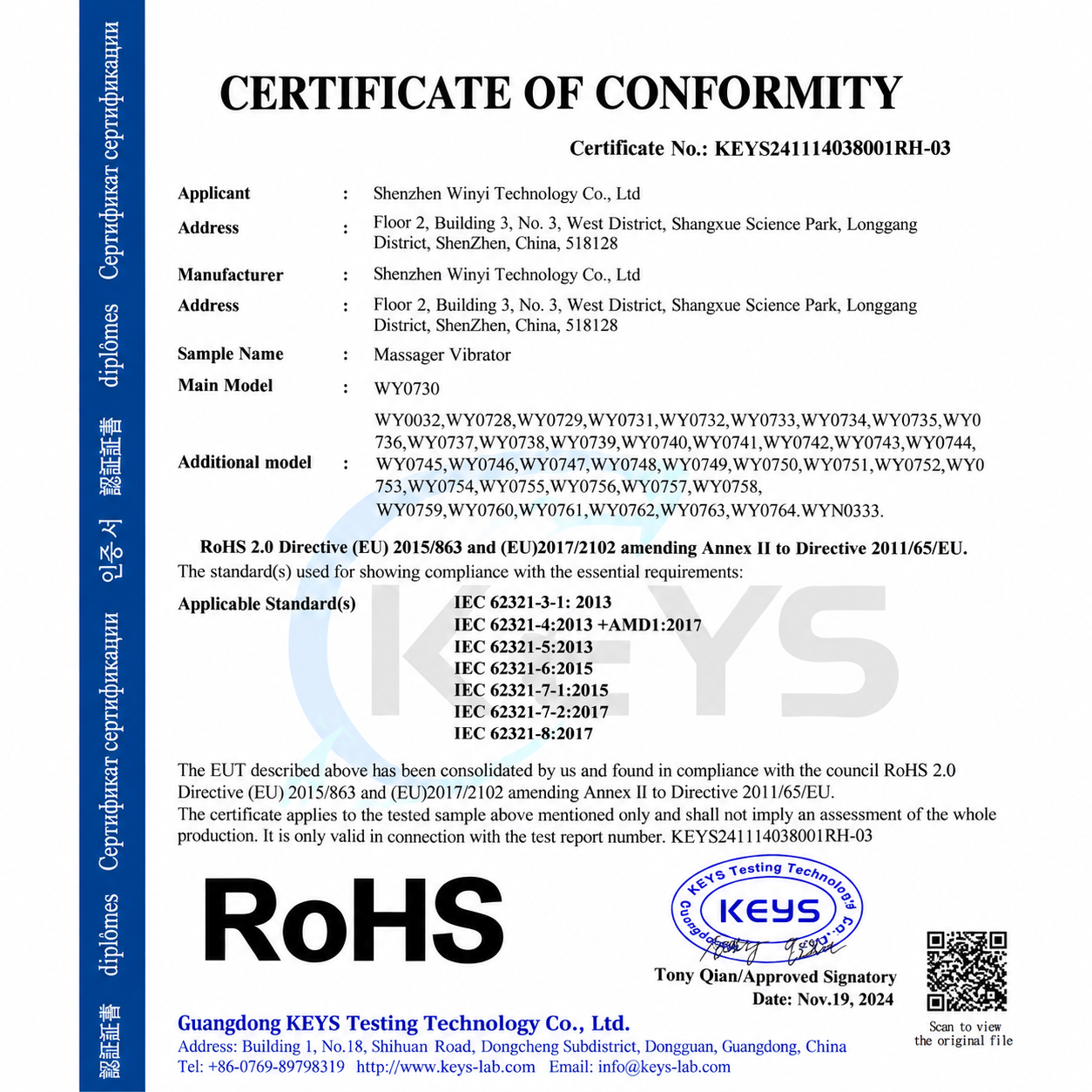
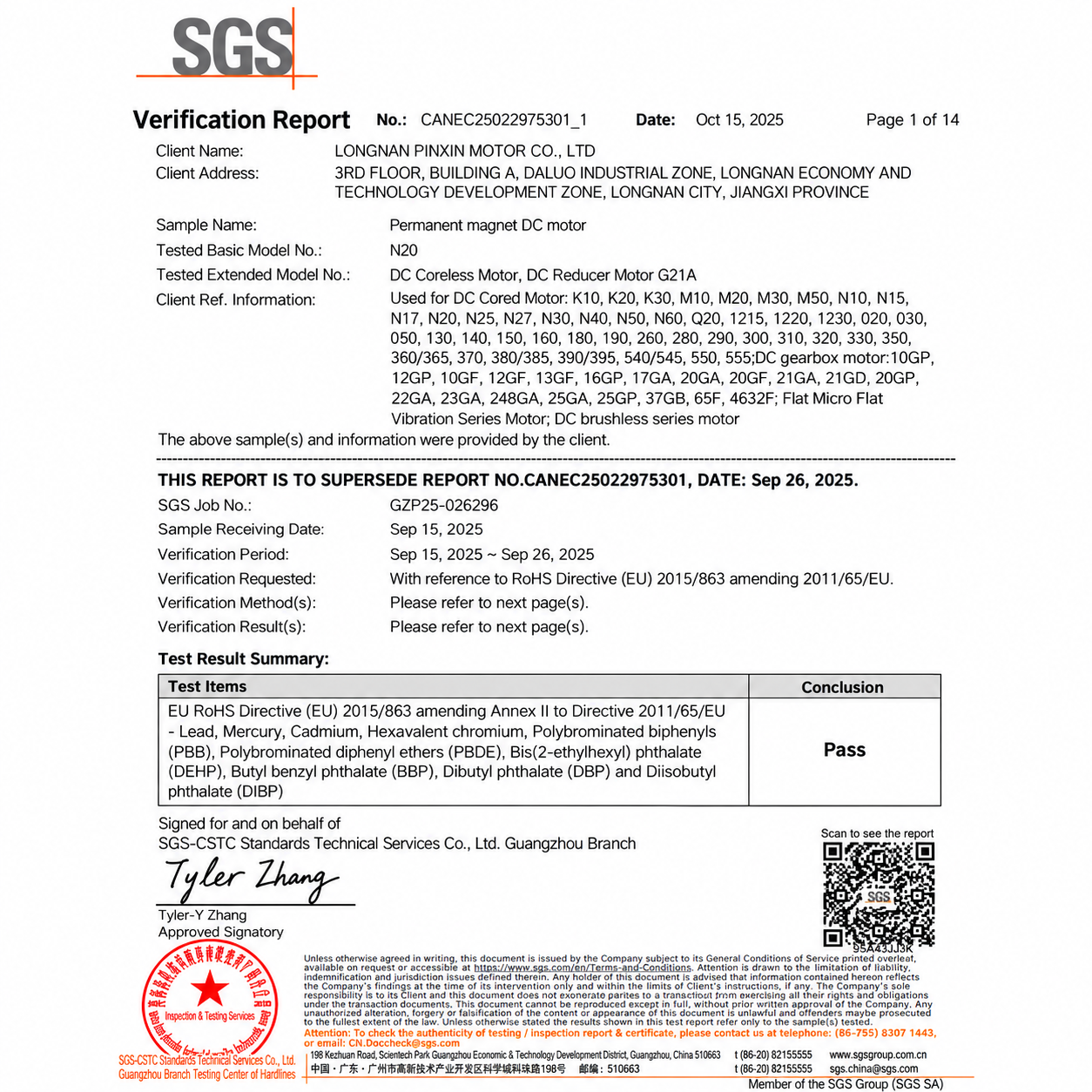
The full pack runs: conformity certificate, test reports, safety data sheets, transport documents, and the declaration itself. “Complete” means each one names the specific model, the testing lab, the lab’s accreditation mark, the issue date and the expiry, a report missing any one of those five elements isn’t something a retailer’s compliance team will accept. The declared-model rule matters more than buyers expect: a colour change, a motor swap, or any material substitution can void the coverage a report provides, even when the product looks identical on the outside. A simple expiry tracker per SKU and market catches this before a retailer’s own review does, and it’s a cheap habit against a manufacturing partner that should be issuing updated documentation alongside any product change in the first place.
What each document in the pack actually proves, and when it needs a fresh look rather than a renewal on faith.
| Documento | What it proves | Where it is checked | Review trigger |
|---|---|---|---|
| Conformity certificate | The declared model meets the stated directive or regulation | Customs, marketplace onboarding, retailer compliance review | Any colour, material or motor change |
| Test report | A named lab tested the declared model against named limits | Retailer compliance file, customs spot check | Report nears its stated expiry or review interval |
| Safety data sheet | Material hazard information for the actual substance used | Warehouse handling, freight forwarder, workplace safety review | Formulation or material supplier change |
| Transport documents | Battery or hazardous-material status for the shipped unit | Freight forwarder, customs, carrier acceptance check | New battery type, capacity or cell count |
| Declaration of conformity | The manufacturer’s own statement the product meets stated requirements | Customs, marketplace onboarding, retailer compliance review | Any change to the declared model |


Common Pitfalls: Fake Reports, Expired Reports and Uncovered Models
Three counterfeit patterns account for most of the bad paperwork buyers actually encounter, and all three are catchable before you place an order.
The first is a forged lab header on an otherwise invented report. The second is a cropped report, genuine at the source but from a competitor’s product rather than the one you’re buying. The third, and the easiest to miss, is one real report reused across several unrelated SKUs it was never actually run against. The detection method for all three is the same: verify the lab’s accreditation number against the accrediting body’s own registry, then contact the issuing lab directly rather than trusting the PDF in front of you. Build this check into your own supplier onboarding process rather than treating it as a one-time step, since a report that was genuine at signing can still expire, get swapped, or stop covering a product that’s since changed. Independent verification costs money and takes time, so it’s worth asking a prospective supplier for the checklist and a sample report before you commit to an order, rather than discovering a gap in the paperwork after you’ve already paid a deposit.
Need the Certification File for Your Next Launch?
Tell us your target markets, product category and launch window, we will confirm which instruments apply and which documents ship with the quotation.
Request the Certification Checklist and a Sample Test Report – See Our OEM and ODM Manufacturing Capabilities
Test reports from accredited laboratories – market-specific declarations per destination – document pack reviewed before production
FAQ
Is CE marking required for sex toys?
Powered products need it for whichever directives actually apply, since CE is a bundle rather than one single stamp. The set of directives that applies depends on electrical status and materials, so two products in the same category can need slightly different documentation.
Does a sex toy need FDA approval?
Separate this into two different questions: is the product a regulated device, and is the material grade documented at all? Most adult toys aren’t cleared or classified as devices, so the material test report is the evidence that actually matters here.
What is Proposition 65 and does it apply to adult toys?
It’s a California warning-and-exposure regime, not a product ban. It follows goods sold into California regardless of where they’re made, so it attaches to your sales channel rather than to your factory or your country of origin.
Can I sell an adult toy on a marketplace without a test report?
Marketplace policy requires a compliance file on request, even if no document is checked at the moment you list. Hold the report before you list. Waiting until a suspension notice arrives usually costs you the listing itself, not just the paperwork.
How long is a compliance report valid?
Validity follows the declared model and material, not a fixed calendar date on the report itself. Use a researched review interval instead of assuming a report lasts indefinitely, and track renewal per SKU and per market separately.
How do I verify that a supplier’s test report is genuine?
Check the laboratory’s accreditation number against the accrediting body’s own registry, then contact the issuing lab directly rather than trusting the document alone. Confirm the declared model matches your quoted SKU exactly, and if any check fails, don’t place the order.